AI Deepfake Voice Cloning Scams: Full Guide
AI deepfake voice cloning scams are surging. Learn how fraudsters clone voices in seconds, who they target, and how to protect yourself from this rapidly growing threat.
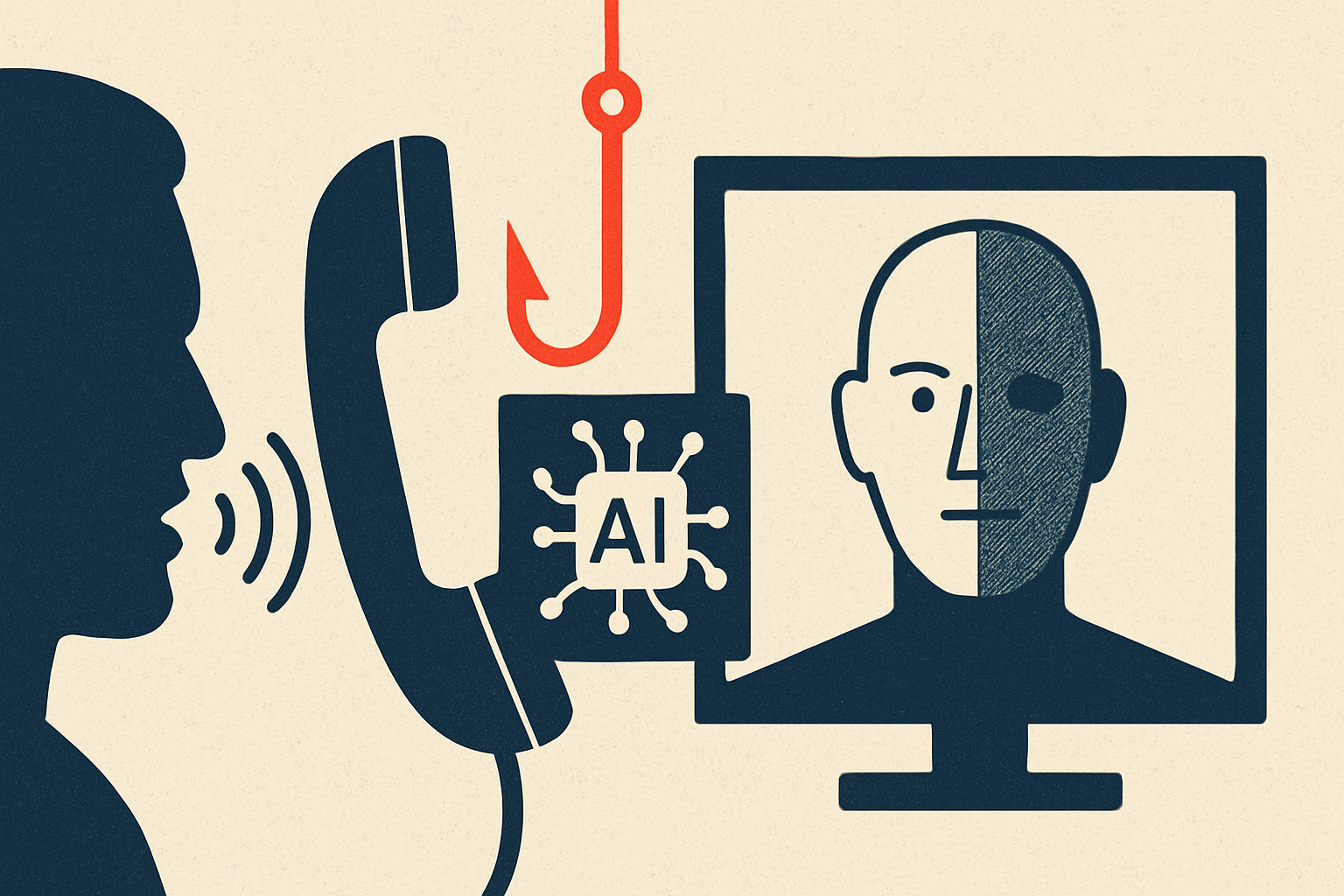
Imagine picking up the phone and hearing your child's voice — trembling, urgent, begging for emergency money. Now imagine that voice was never really your child at all, but a machine-generated clone assembled from a handful of social media clips. This is not a hypothetical. AI deepfake voice cloning scams are one of the fastest-growing and most psychologically devastating fraud schemes in operation today, targeting everyday families, corporate employees, and even senior government officials. The numbers are staggering: the FBI's 2025 Internet Crime Report logged more than 22,000 AI-related fraud complaints with losses exceeding $893 million — and experts warn that fewer than 5% of victims ever report their losses, making the true scale far larger.
What Is This Fraud and How It Works
AI voice cloning fraud — also known as voice phishing or "vishing" — exploits publicly available audio to manufacture a convincing replica of a real person's voice. Scammers only need a three-second audio sample to clone someone's voice, harvested from TikTok videos, YouTube clips, voicemail greetings, or any public recording. From that sliver of audio, commercially available AI tools — many of them free — can produce an unlimited stream of synthetic speech that mimics the target's tone, cadence, accent, and emotional register.
Attacks typically unfold in one of three ways. In the "virtual kidnapping" or "grandparent scam" variant, fraudsters clone a loved one's voice and call the victim claiming there has been an accident, an arrest, or a kidnapping — demanding immediate wire transfers or gift cards for release. In the corporate "CEO fraud" variant, a cloned executive voice calls a finance employee and requests an urgent, off-books wire transfer. And in government impersonation attacks, cloned voices of senior officials are used to extract credentials or redirect secure communications. In early 2024, a finance employee at global engineering firm Arup joined what appeared to be a routine video call with the company's CFO — but every participant on that call was a deepfake, and by the end, $25.6 million had been transferred across 15 transactions. Deepfake-enabled vishing attacks surged by over 1,600% in the first quarter of 2025 compared to the fourth quarter of 2024, and Deloitte's Center for Financial Services projects AI fraud losses in the United States could reach $40 billion annually by 2027.
Warning Signs to Watch For
Voice cloning scams are designed to exploit trust and urgency — two factors that shut down rational thinking. Recognizing the hallmarks of an attack is the first line of defense.
**Unexpected urgency or secrecy.** Scam calls almost always manufacture a crisis that demands you act immediately and tell no one — don't call another family member, don't contact the bank, don't verify. This pressure is a manipulation technique, not a legitimate request.
**An unfamiliar number carrying a familiar voice.** Fraudsters pair spoofed caller ID with a cloned voice to maximize deception. Just because a voice sounds right does not mean the number is legitimate.
**Requests for gift cards, wire transfers, or cryptocurrency.** No legitimate family member in an emergency, no genuine executive, and no real government official will ask you to pay via gift card or cryptocurrency. This payment method is irreversible and is the definitive signature of fraud.
**Slight audio artifacts.** AI-generated voices have improved dramatically but can still exhibit unnatural pauses, robotic rhythm, or a slight metallic undertone, especially under stress or with unusual phrasing. Research shows that most people still struggle to tell a cloned voice from the real thing, but careful listeners can sometimes catch these tells.
**A "smishing plus vishing" sequence.** The FBI specifically warned about a pattern where attackers first send a text message to establish rapport, then follow up with a cloned voice call to deliver the main deception. If you receive an unsolicited text from a senior contact followed immediately by an unusual call, treat it as a red flag.
How to Protect Yourself
**Establish a family safe word.** The single most effective personal defense is a pre-arranged code word known only to your inner circle. If someone calls claiming to be a family member in distress, ask for the safe word. A fraudster — no matter how convincing the cloned voice — cannot know it.
**Hang up and call back on a verified number.** Regardless of how urgent the situation sounds, end the call and dial the person directly using a number you already have stored. Never call back on a number provided by the incoming caller.
**Limit your public audio footprint.** Be conscious of how much of your voice — and your family members' voices — exists publicly online. Long video posts, podcast appearances, and even extended voicemail greetings all provide raw material for cloning.
**Apply verification policies at work.** Nearly 60% of U.S. companies reported an increase in fraud losses from 2024 to 2025, driven largely by AI-powered deepfakes. Businesses should implement mandatory dual-authorization for any wire transfer, regardless of how senior the requesting voice sounds. No single phone call should be sufficient to authorize a financial transaction.
**Stay current on regulatory protections.** The FCC banned AI-generated voices in robocalls under the Telephone Consumer Protection Act, and the FTC introduced rules specifically prohibiting AI-powered impersonation of individuals, businesses, or government agencies to commit fraud. Knowing your rights helps you recognize when they are being violated.
**Use detection tools with caution.** AI-powered audio detection tools are emerging on the market, but human judgment remains essential — no automated tool is foolproof. Treat every unsolicited, urgent call as suspect until independently verified.
What to Do If You're Targeted
If you believe you have received an AI voice cloning scam call — whether or not you transferred money — act immediately.
**Do not send additional funds.** If you have already transferred money, stop all further payments. Contact your bank or wire service immediately; in some cases, rapid action can intercept a transfer.
**Report to federal authorities.** File a complaint with the FTC at reportfraud.ftc.gov and submit a report to the FBI's Internet Crime Complaint Center at ic3.gov. Quick action may assist in asset recovery and contributes to law enforcement's ability to track and disrupt these operations.
**Notify local law enforcement.** File a police report, even if recovery seems unlikely. A documented case supports federal investigations and may be required by your bank or insurer.
**Alert your contacts.** If your voice or likeness was used in the scam, warn friends, family, and colleagues so they are not victimized by the same campaign. Once an account or voice is compromised, attackers frequently use it to target the victim's extended network in a ripple effect.
**Seek emotional support.** Victims of voice cloning scams report profound feelings of betrayal, shame, and helplessness — particularly because the deception exploited a voice they loved and trusted. This is a crime, not a personal failure. Organizations like the AARP Fraud Watch Network offer free support resources for fraud victims of all ages.
- 01Voice Cloning Is the New BEC: Deepfake CEO Fraud in the US— CybelAngel
- 02The Rise of the AI-Cloned Voice Scam— American Bar Association
- 03FBI Warning AI Voice Phishing: How To Spot And Stop The Threat— BlackFog
- 04AI voice fraud draws new congressional scrutiny— Biometric Update