AI Deepfake Voice Cloning Scams: The $893M Threat
AI deepfake voice cloning scams cost Americans $893M in 2025. Learn how they work, the red flags to spot, and how to protect yourself now.
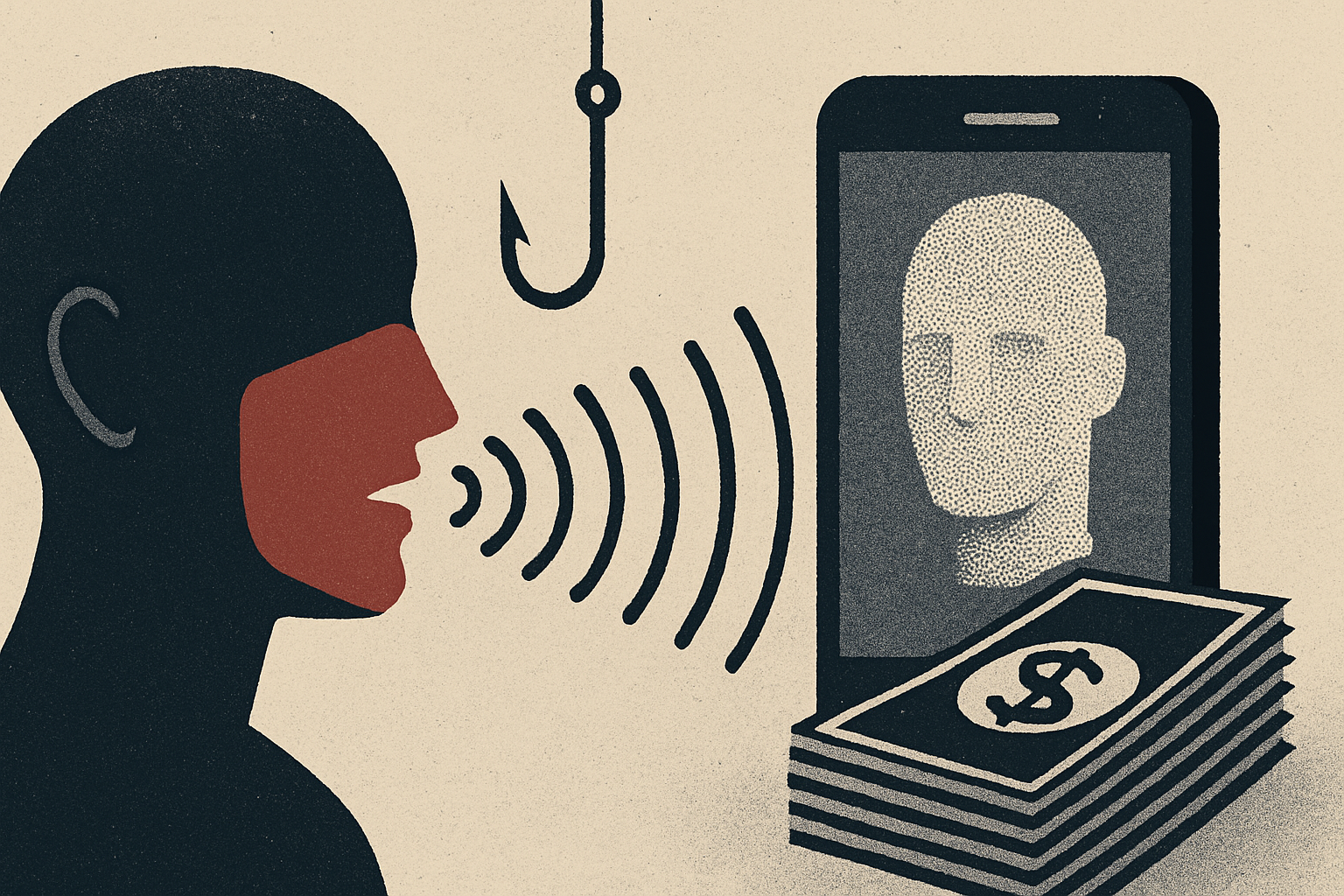
Imagine your phone rings. It's your daughter's voice — panicked, tearful, begging for help after a car accident. She needs $15,000 in cash right now to avoid jail. You send it. Then you call her back on her real number, and she answers — calm, safe, and confused. The voice you heard wasn't hers. It was a machine. This is AI deepfake voice cloning fraud, and according to the FBI's 2025 Internet Crime Complaint Center (IC3) annual report, it helped fuel $893 million in AI-related losses across more than 22,000 complaints — the first time IC3 has ever broken out AI as a formal crime category. This is not a future threat. It is happening right now, to ordinary people across the country.
What Is This Fraud and How It Works
AI voice cloning scams — also called deepfake vishing (voice phishing) — use artificial intelligence tools to replicate a real person's voice from as little as three seconds of publicly available audio, such as a clip from social media, a podcast, or a YouTube video. Once cloned, the AI can make that voice say anything the scammer scripts. Criminals pair the fake voice with a spoofed caller ID to make the call appear to come from a familiar number, then deliver a high-pressure scenario designed to bypass rational thinking. The two most common variants are the 'grandparent/family emergency' scam — where a loved one appears to be in crisis and needs immediate cash — and CEO fraud or business email compromise (BEC), where a cloned executive voice instructs a finance employee to wire funds urgently and secretly. In one of the most documented corporate cases, a finance worker at engineering firm Arup was deceived by a deepfake video call featuring AI-generated likenesses of the company's CFO and colleagues, resulting in $25.6 million in fraudulent wire transfers across 15 transactions. The FBI explicitly warned in 2025 about active campaigns using AI-cloned voices to impersonate senior U.S. government officials, combining smishing (text phishing) and deepfake vishing to establish credibility before extracting sensitive information or money. Criminal networks now offer 'Scam-as-a-Service' kits — packaging voice cloning tools, fake website generators, and targeting data — for as little as $60 per month, making this technology accessible to even unskilled bad actors.
Warning Signs to Watch For
The core danger of AI voice cloning is that it weaponizes trust. When you hear what sounds like your child's voice in distress, your rational defenses collapse. Experts note that 'the emotional realism of a cloned voice removes the mental barrier to skepticism.' That said, there are warning signs. First, watch for extreme urgency: scammers pressure you to act immediately and in secret, with no time to verify. Second, the payment method is always a red flag — couriered cash, wire transfers, gift cards, or cryptocurrency are demanded because they are irreversible. Third, listen for subtle audio anomalies: unnatural pauses, slight robotic cadence, or audio that cuts in and out, as even high-quality clones can lack the natural flow of a real conversation. Fourth, be alert to requests made outside normal business hours, especially in corporate settings — CEO fraud calls are often timed to reduce the chance of in-person confirmation. Fifth, any caller who tells you not to speak with family members, your bank, or law enforcement before acting is almost certainly running a scam. Notably, studies show that human detection accuracy for deepfake audio can drop to as low as 24.5% for high-quality clones, meaning your ears alone are no longer a reliable defense.
How to Protect Yourself
The single most powerful defense against AI voice cloning fraud is a simple one: hang up and call back using a number you already know and trust — not one provided by the caller. If it's really your family member in crisis, they will answer. If it's a scammer, the ruse collapses immediately. For families, establish a private code word that only real members know, agreed upon in advance, to confirm identity during any unexpected distress call. For businesses, implement mandatory out-of-band verification for all financial requests: no wire transfer or credential change should ever be authorized based solely on a phone call, regardless of how familiar the voice sounds. A secondary approval through a separate, trusted channel is non-negotiable. The FCC has ruled that AI-generated voices in robocalls are subject to the same legal protections as prerecorded messages under the TCPA, and the FTC has introduced rules specifically prohibiting AI-powered impersonation of individuals, businesses, and government agencies — but regulatory deterrence alone cannot protect you in the moment. Keep social media audio and video exposure in mind: the clips you post publicly are the raw material scammers use to build your clone. Limit long audio samples and regularly audit your privacy settings.
What to Do If You're Targeted
If you suspect you've been targeted by an AI voice cloning scam — whether or not you lost money — report it immediately. In the United States, file a complaint with the FTC at ReportFraud.ftc.gov and submit a report to the FBI's Internet Crime Complaint Center at IC3.gov. If funds were transferred, contact your bank or financial institution right away: the FBI's IC3 Recovery Asset Team successfully froze $679 million across thousands of incidents in 2025, but speed is critical. Notify local law enforcement as well, as reports create investigative trails that help identify active fraud campaigns. If the scam originated via a social media platform, report the account to the platform directly for violating its impersonation policies. Remember: you are not alone, and you should not feel ashamed. AI voice cloning is so convincing that even security professionals can be deceived. Victims report feelings of betrayal, fear, and helplessness — and those reactions are entirely understandable given the sophistication of these attacks. The best thing you can do after an incident is report it quickly, so authorities can act and others can be warned.
- 01Fighting back against harmful voice cloning— FTC
- 022025 IC3 Annual Report— FBI / IC3
- 03FBI Warning AI Voice Phishing: How To Spot And Stop The Threat— BlackFog (citing FBI PSA)
- 04The Rise of the AI-Cloned Voice Scam— American Bar Association