AI Deepfake Voice Cloning Scams: What to Know
AI deepfake voice cloning scams cost Americans $893M in 2025. Learn how these scams work, who's targeted, and how to protect yourself now.
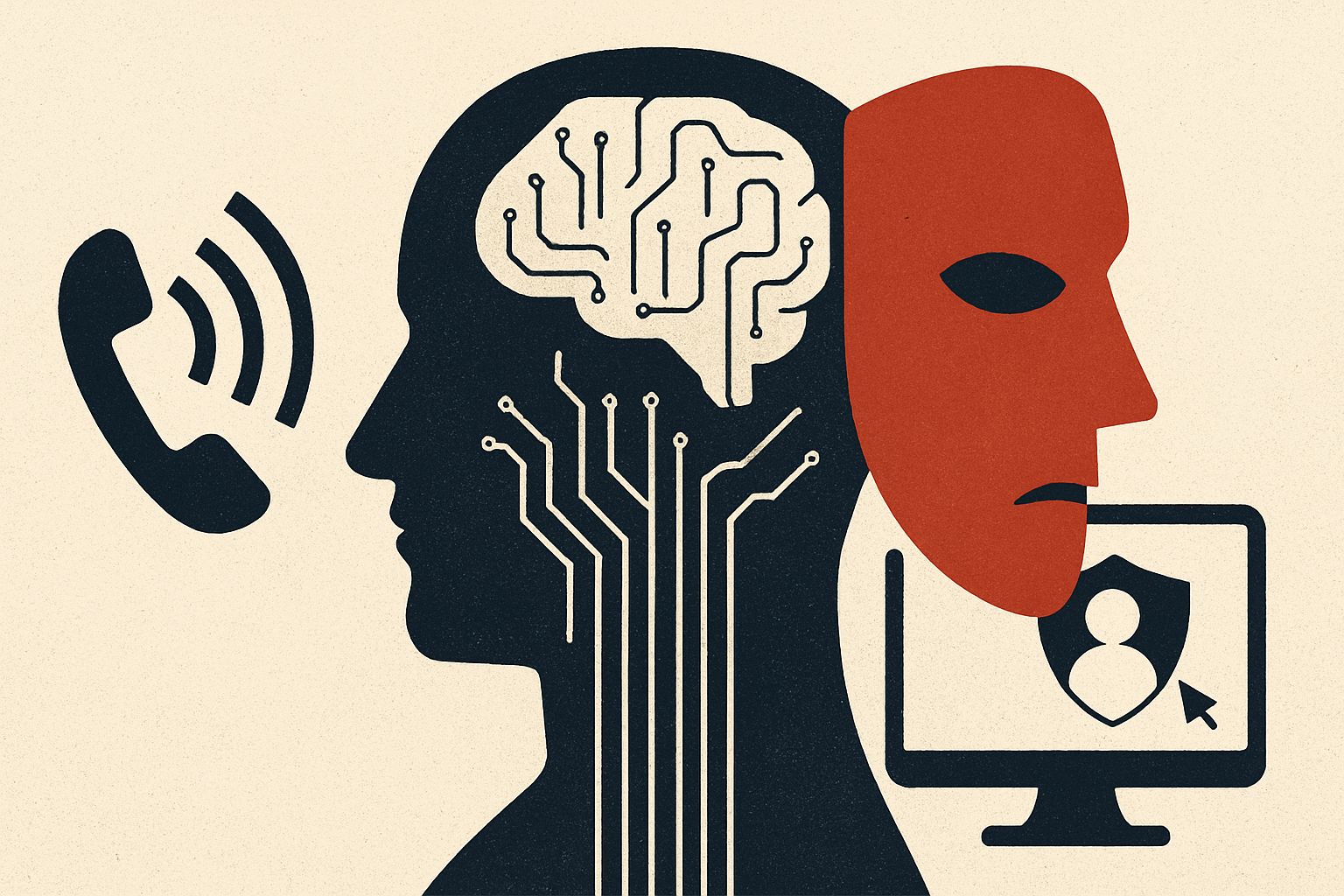
A mother receives a frantic call. Her daughter's voice — unmistakably hers — cries out for help, begging for emergency money. The mother panics and wires thousands of dollars before realizing her daughter was never in danger. The voice was a fabrication, generated in seconds by artificial intelligence. This is not a rare edge case. It is one of the fastest-growing fraud vectors in the United States, and the numbers are staggering. According to the FBI's 2025 Internet Crime Report — the first in the agency's nearly 25-year history to feature a dedicated section on AI — Americans filed 22,364 AI-related fraud complaints resulting in losses of nearly $893 million in a single year. The era of AI deepfake voice cloning scams has arrived, and it is escalating rapidly.
What Is This Fraud and How It Works
AI voice cloning is the process by which software analyzes a person's speech patterns to generate new audio that sounds identical to the original speaker. Criminals need surprisingly little raw material to build a convincing clone — short audio clips harvested from social media videos, voicemail greetings, or public recordings are often enough. The FTC has recognized that this technology poses significant risk, noting that families and small businesses can be targeted with fraudulent extortion scams, and that creative professionals can have their voices appropriated in ways that deceive the public. Once a clone is ready, fraudsters deploy it across several high-impact schemes. In 'grandparent' or 'family emergency' scams, the cloned voice of a child or grandchild calls an older relative, claiming to be in jail, in a hospital, or in danger and demanding immediate cash. In Business Email Compromise (BEC) attacks, criminals clone the voice of a CEO or CFO and instruct employees to execute unauthorized wire transfers — a tactic that cost one Hong Kong engineering firm $25.6 million in a single deepfake video call. The FBI has also warned that since April 2025, malicious actors have impersonated senior U.S. officials using AI-generated voice messages combined with text messages 'in an effort to establish rapport before gaining access to personal accounts.' These hybrid attacks — pairing smishing texts with deepfake voice follow-up calls — represent a dangerous evolution in social engineering. Fraud-as-a-Service platforms now offer AI voice cloning subscriptions for under $50 a month, placing this capability within reach of virtually any criminal actor.
Warning Signs to Watch For
The defining danger of voice cloning fraud is that the audio itself may be indistinguishable from the real person. Researchers have noted that the emotional realism of a cloned voice removes the mental barrier to skepticism — if it sounds like your loved one, your rational defenses tend to shut down. That said, several situational red flags reliably accompany these attacks. Be immediately suspicious of any unsolicited call or voicemail that opens with a crisis and escalates to an urgent demand for money, gift cards, wire transfers, or cryptocurrency. Scammers rely on pressure techniques to defraud Americans while deploying fake social profiles, voice clones, and believable scenarios involving loved ones or authority figures. Watch for calls that come from unfamiliar numbers even when the voice sounds familiar; legitimate emergencies can almost always be verified through a second channel. Be alert to callers who discourage you from contacting other family members or law enforcement — isolation is a signature tactic. On the corporate side, any voice-only or video instruction to transfer funds or share credentials should trigger mandatory verification through a separate, pre-established communication channel, regardless of how authentic the caller sounds. Voice cloning has become so accessible that scammers can impersonate loved ones or trusted figures using just seconds of audio, pushing victims into hasty, emotional decisions before critical thinking has a chance to engage. Older adults are disproportionately targeted: one in four cyber-scam complaints are reported by victims over 60, and in 2025, older Americans accounted for $352 million of the $893 million in AI-related fraud losses.
How to Protect Yourself
Defense against voice cloning fraud is built on verification habits, not technology alone. The single most effective countermeasure is establishing a family or team 'safe word' — a pre-agreed code word that must be spoken before any emergency money request is honored. If the caller cannot produce the word, hang up and call the person directly on a number you already have stored. Never rely solely on caller ID, which can be spoofed. For businesses, implement strict dual-authorization protocols for all wire transfers and require that any voice or video instruction be confirmed via email or an in-person exchange with a second approver. The FBI urges everyone to 'Take a Beat' — pause before acting on any urgent request, no matter how convincing it sounds. The FCC has banned AI-generated voices in robocalls, and the FTC has introduced rules that specifically prohibit impersonating individuals, businesses, or government agencies to commit fraud, but regulatory coverage cannot keep pace with the speed of criminal innovation. Limit the publicly available audio of your voice and your family members' voices where practical — social media videos and public recordings are the primary harvesting ground for cloning material. Organizations can invest in AI-powered voice-clone detection tools, though these are not foolproof and human judgment often still outperforms automated software. Staying informed is itself a protective measure: the FBI and FTC both regularly publish scam alerts, and subscribing to their advisories ensures you see new threat patterns as they emerge.
What to Do If You're Targeted
If you believe you have been contacted by a voice-cloning scammer — whether or not money was lost — immediate action matters. First, do not transfer any additional funds and do not provide personal information, account numbers, or passwords. Hang up and independently verify the situation by calling the supposed caller directly using a number from your own contacts, not one provided during the suspicious call. Report the incident to the FTC at ReportFraud.ftc.gov and file a complaint with the FBI's Internet Crime Complaint Center at IC3.gov. Quick action may assist in asset recovery or investigation. Save all evidence: screenshots, call logs, voicemail recordings, phone numbers, and any text messages associated with the contact. If the scam originated or was promoted through a social media platform, report the account for violating the platform's policies on impersonation and synthetic media. If you sent money via wire transfer or gift card, contact your bank or the gift card issuer immediately — in some cases, funds can be frozen before they are withdrawn. Do not let embarrassment delay reporting. Victims of AI voice fraud report feelings of shame, but these scams are engineered by sophisticated criminal networks to defeat rational decision-making. Reporting your case directly helps law enforcement build the pattern evidence needed to disrupt these operations and protect the next potential victim.