Bank Impersonation Vishing Scams: What to Know
Bank impersonation vishing calls are surging. Learn how these phone scams work, the red flags to spot, and how to protect your accounts from fraud.
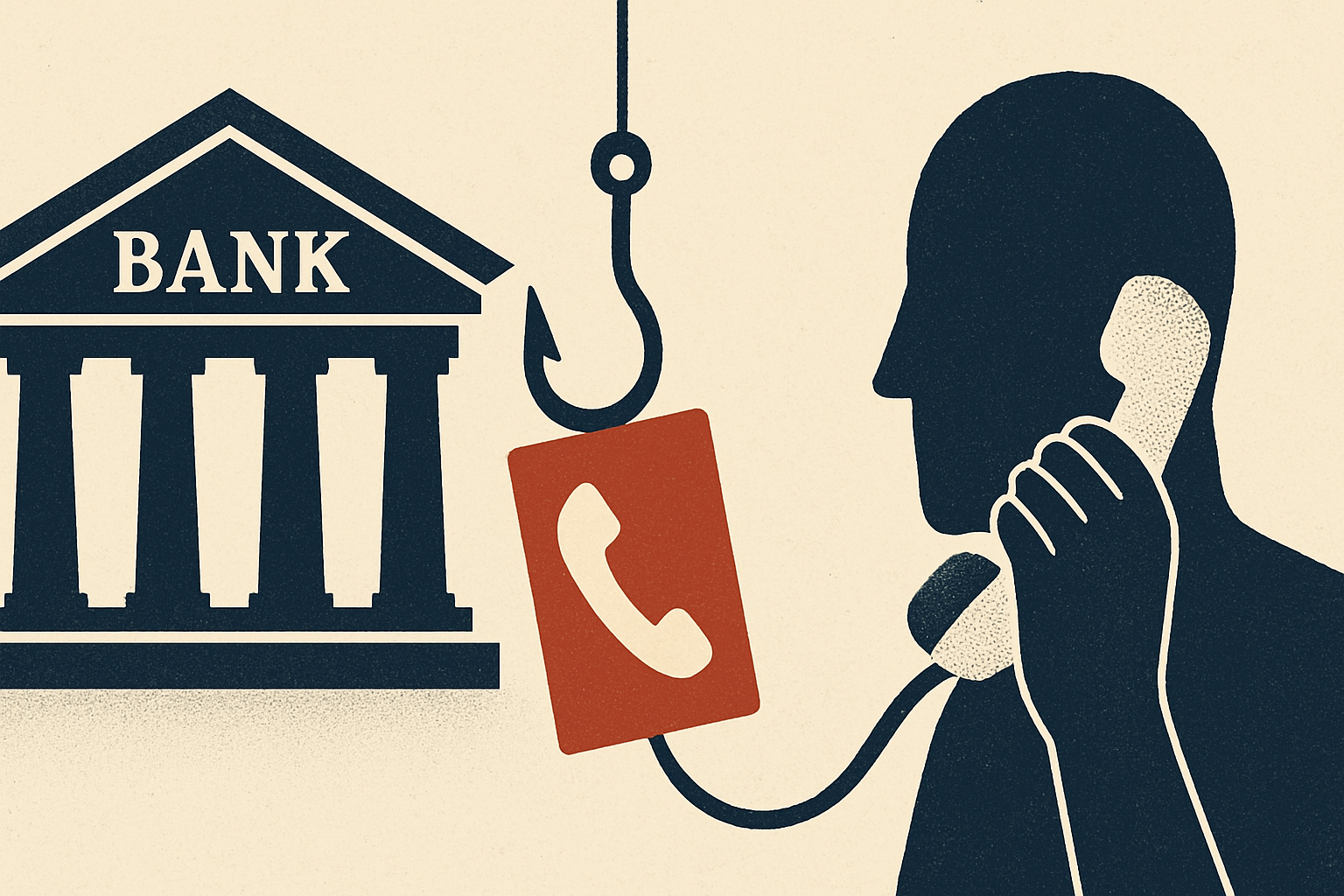
Your phone rings. The caller ID shows your bank's name and a number that looks legitimate. A calm, professional voice announces they are from your bank's fraud department and that suspicious activity has been detected on your account. They need to verify your identity — right now — or your funds could be at risk. This is bank impersonation vishing: one of the most financially devastating and psychologically sophisticated phone scams targeting Americans today. Vishing — voice phishing — has evolved far beyond clumsy robocalls. Modern bank impersonation scammers use spoofed caller IDs, scripted urgency, and personal data harvested from prior breaches to make their calls feel completely real. Understanding how this fraud works is the first line of defense.
What Is Bank Impersonation Vishing and How It Works
Bank impersonation vishing is a form of social engineering in which criminals pose as representatives of your financial institution over the phone to steal money or sensitive personal data. The scale of the problem is staggering. According to the FDIC's June 2025 Consumer News advisory, consumers reported losing $12.5 billion to fraud in 2024, with imposter scams ranking as the second-highest category of reported losses. The FBI's Internet Crime Complaint Center (IC3) has separately warned that since January 2025, it received more than 5,100 complaints specifically related to account takeover (ATO) fraud — the direct end-goal of most bank impersonation vishing calls — with losses exceeding $262 million in that period alone.
The mechanics of the scam typically follow a recognizable pattern. A fraudster calls a target using a spoofed phone number that appears to belong to the victim's real bank. The impersonator asks about recent transactions to lead the customer to believe there is fraudulent activity involving their account. From there, the scammer requests sensitive credentials — Social Security numbers, debit card numbers, account passwords, or one-time PINs — under the guise of 'verifying' the victim's identity or 'securing' their account. In a particularly alarming variant documented by the FBI, scammers have even dispatched in-person accomplices to victims' homes, instructing customers by phone to cut up their bank cards but leave the chip intact, then sending a courier to collect the chip and PIN — enough to drain the account entirely.
Scammers have also escalated their tactics through multi-layered impersonation. As the FTC has noted, a caller may initially claim to be from a well-known bank, then 'transfer' the victim to a fake FBI agent or even a fake FTC representative to add a veneer of government authority and trap victims in an ever-deepening web of manipulation.
Warning Signs to Watch For
Recognizing the hallmarks of a bank impersonation vishing call can mean the difference between keeping your savings and losing them. Here are the most critical red flags:
**Unsolicited urgency.** Scammers manufacture time pressure — telling you that you must act immediately or your account will be frozen, your funds lost, or law enforcement will be involved. Legitimate bank fraud teams allow you time to verify.
**Requests for your credentials.** Your real bank will never ask for your full Social Security number, account password, or one-time security code over an inbound call. The FDIC explicitly warns that bank impersonation scammers request personal information like Social Security numbers, credit card or debit card numbers, or bank account passwords — information no genuine bank representative needs you to read back to them.
**Caller ID you can trust too much.** Spoofing technology allows criminals to display your bank's exact phone number on your caller ID. A recognized number is not proof the caller is legitimate.
**The 'transfer' to a second authority.** As the FTC has documented, scams are growing more elaborate, with callers claiming to transfer victims to a fake bank official, fake FBI agent, or even a fake FTC staffer — each adding artificial credibility to the deception.
**Requests for non-traditional payment.** If a supposed bank representative asks you to pay via wire transfer, cryptocurrency, or gift cards to 'protect' your account, that is an unambiguous sign of fraud. The FBI's IC3 notes that cyber criminals commonly use social engineering — including calls — to redirect funds through these hard-to-recover channels.
**Couriers at your door.** The FBI has specifically warned of an emerging scheme where vishing callers instruct victims to physically hand over their bank card chip to an in-person 'bank representative.' No bank operates this way.
How to Protect Yourself
Defending against bank impersonation vishing requires both skepticism and a clear action plan.
**Hang up and call back independently.** If you receive any unsolicited call from someone claiming to be your bank, hang up. Then call your bank directly using the number printed on the back of your debit or credit card or listed on your bank's official website — not any number the caller provides. This single habit defeats the majority of vishing attempts.
**Never share one-time PINs or passwords on an inbound call.** One-time passwords and security codes are designed to verify you to the bank — not to verify a caller to you. Sharing them grants full account access to whoever asks.
**Enable account alerts.** Set up real-time transaction alerts through your bank's official app or website. If genuine fraud occurs, you will know about it without needing to rely on a phone call.
**Treat urgency as a red flag, not a reason to comply.** Pressure to act immediately before you 'lose your chance' is a manipulation tactic, not a banking reality. Slow down.
**Do not answer calls from unknown numbers.** Let unfamiliar numbers go to voicemail. Legitimate fraud departments will leave a message, and you can call back through verified channels.
**Protect your personal data upstream.** Vishing callers often know your name, partial account information, or address — sourced from prior data breaches. Regularly review your accounts, use unique strong passwords, and enable multi-factor authentication on all financial accounts.
What to Do If You're Targeted
If you believe you have received a bank impersonation vishing call — or have already been victimized — act quickly.
**Contact your real bank immediately.** Call the number on the back of your card. Report the interaction to your bank's fraud department so they can freeze compromised accounts, issue new cards, and document the incident.
**Report to the FBI's IC3.** File a complaint at www.ic3.gov. The FBI requests that victims report fraudulent or suspicious activities as quickly as possible, including the phone numbers used by scammers. This intelligence directly informs federal investigations.
**Report to the FTC.** File a report at ReportFraud.ftc.gov. In 2024, the FTC received nearly 850,000 reports of imposter scams — your report contributes to enforcement actions and can help authorities dismantle active fraud rings. Since its Impersonation Rule took effect in April 2024, the FTC has already secured more than $70 million in consumer redress.
**Contact your state attorney general.** Many states have consumer protection divisions with additional resources for fraud victims.
**Document everything.** Note the date and time of the call, the number shown on caller ID, what the caller said, and any information you may have shared. This record is essential for any fraud investigation or financial institution dispute.
Bank impersonation vishing is not a fringe threat — it is a multibillion-dollar criminal industry targeting people of all backgrounds and ages. The good news is that awareness is a powerful weapon. When you know how the scam works, who it targets, and what it sounds like, you are far less likely to become its next victim. Share this information with friends, family, and colleagues — especially those who may be less familiar with these tactics. Staying informed and staying skeptical are the two most effective fraud defenses available.
- 01Bank Impersonation Scams and Fake Banks— FDIC
- 02Account Takeover Fraud via Impersonation of Financial Institution Support— FBI / IC3
- 03Safety Concern Related to Recent Trend in Financial Institution Customer Fraud Scheme— FBI / IC3
- 04Celebrating the Impersonation Rule that helps the FTC fight scams— FTC