Charity Fraud After Disasters: Don't Let Scammers Steal Your Compassion
Disaster charity scams stole $96 million from donors in 2024. Learn how fake relief organizations operate and how to protect yourself before you give.
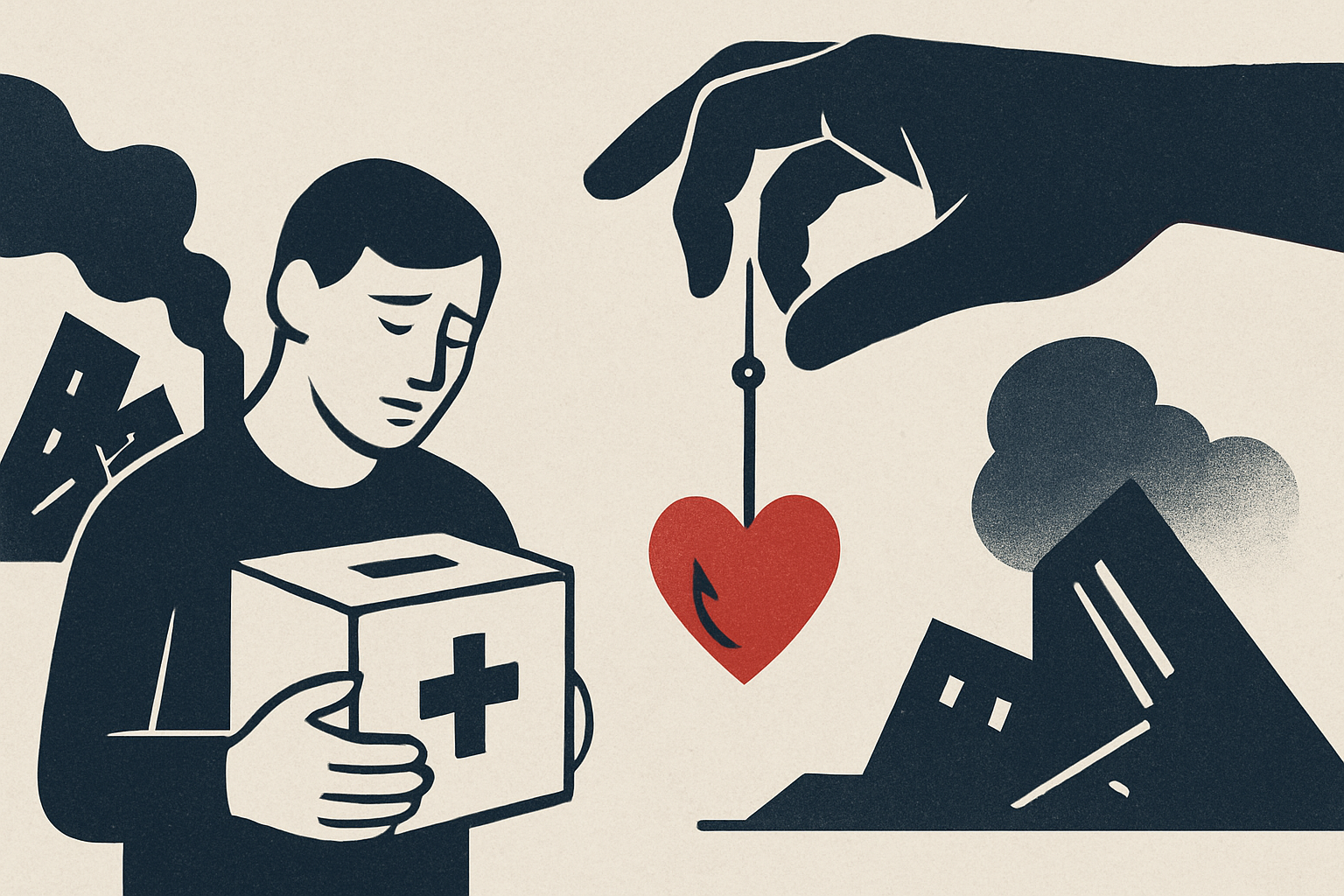
When a wildfire erupts, a hurricane makes landfall, or a mass casualty event shocks the nation, millions of compassionate Americans open their wallets. Fraudsters know this — and they move faster than first responders. In 2024, the FBI's Internet Crime Complaint Center (IC3) received more than 4,500 complaints representing approximately $96 million in losses from fraudulent charities, crowdfunding accounts, and disaster relief campaigns. Behind every one of those complaints is a real person whose generosity was weaponized against them. Understanding how these schemes work is the first step to making sure your donation reaches actual victims.
What Is Disaster Charity Fraud and How It Works
Disaster charity fraud is the practice of exploiting public sympathy in the immediate aftermath of a catastrophe to collect donations that never reach victims. Scammers take advantage of catastrophic incidents — such as mass casualty events, terrorist attacks, natural disasters, or pandemics — to pose as charitable entities providing humanitarian aid, soliciting both monetary and cryptocurrency donations. The playbook is disturbingly efficient: in the hours after a hurricane, wildfire, or flood, opportunists register domain names that include the disaster's name and stand up a website using stock images and stolen photos from news coverage. Donations are then routed through gift cards, peer-to-peer payment apps, or cryptocurrency wallets to make them difficult to trace, and the site is often taken down within weeks. Beyond fake websites, scammers also impersonate official entities, celebrities, influencers, or other individuals — for example, posing online as a high-profile victim to solicit donations directly. Increasingly, artificial intelligence is used to increase the perceived legitimacy of these frauds and impersonations, generating convincing text, fake testimonials, and even synthetic images of disaster scenes.
Warning Signs to Watch For
Recognizing a disaster charity scam in the moment is difficult precisely because it is designed to exploit urgency and emotion. Here are the key red flags identified by federal law enforcement and consumer protection agencies. First, watch for names that mimic legitimate organizations — scammers create charities with titles nearly identical to well-known groups, such as substituting one word to evade scrutiny. Second, be skeptical of brand-new organizations that appear only after a disaster strikes; legitimate response charities are usually established, registered organizations that already existed before the event. Third, the payment method is a powerful tell: if a charity or organization asks you to donate through cash, a gift card, virtual currency, or wire transfer, it's almost certainly a scam — legitimate charities accept checks and credit cards. Fourth, CISA specifically warns users to be wary of social media pleas, texts, and door-to-door solicitations related to severe weather events, as these channels are heavily abused. Fifth, high-pressure tactics — being rushed into donating before you can research — and vague, sentimental claims with no specifics about how funds will be used are hallmarks of fraudulent solicitation. Finally, scammers may claim your gift is tax-deductible when it is not, or even thank you for a donation you never made as a pretext to confirm your payment details.
How to Protect Yourself Before You Donate
The most powerful defense against disaster charity fraud is a few minutes of deliberate research before you act. Federal agencies recommend the following best practices. Verify any charity by searching its name alongside the word 'fraud' or 'scam' to surface any complaints or news coverage. Check whether the organization is registered with your state's charity regulator and confirm its tax-exempt status on the IRS website at irs.gov. For crowdfunding campaigns, research who is behind the request, validate that the effort will actually support the advertised beneficiaries, and reverse-search images and stories associated with it, as scammers routinely recycle photos from unrelated events. Give using a check or credit card, never cash, gift cards, or wire transfers. Do not click links or open email attachments from senders you don't know; instead, manually type out any web address. Check that a charity's website uses a .org domain, as most legitimate nonprofit organizations do. CISA further advises exercising caution with any email carrying disaster-related subject lines, attachments, or hyperlinks, since phishing attacks that pose as relief charities are a primary vector for both donation fraud and credential theft. When in doubt, donate directly to nationally recognized organizations — such as the American Red Cross or established community foundations — whose legitimacy you can easily verify.
What to Do If You're Targeted
If you believe you've donated to a fraudulent charity or been targeted by a disaster relief scam, act quickly. First, if you paid by credit card, contact your card issuer immediately to dispute the charge. If you sent a wire transfer or gift card, contact your bank or the card issuer without delay, as time is critical to recovering those funds. Next, report the incident to the FBI's Internet Crime Complaint Center at ic3.gov — include the charity's name, phone number, email addresses, social media handles, payment details such as dates, amounts, and any cryptocurrency addresses, and a full description of how contact was initiated and how you were directed to pay. You should also file a complaint with the FTC at reportfraud.ftc.gov and notify your state's attorney general or consumer protection office. Reporting matters: the data you provide helps law enforcement identify patterns, shut down fraudulent operations, and warn others before more victims are harmed. In a crisis, your compassion is an asset — protecting it with due diligence ensures it reaches the people who truly need it.
- 01Beware of Charitable Fraud Related to Mass Casualty and Disaster Events— FBI / IC3
- 02Charity and Disaster Fraud— FBI
- 03CISA Warns of Hurricane/Typhoon-Related Scams— CISA
- 04FTC, DOJ and CFPB Warn Consumers About Potential Scams and Price Gouging in the Wake of Hurricanes and other Natural Disasters— FTC