Cryptocurrency Exchange Scams: How to Stay Safe
Cryptocurrency exchange scams cost Americans $11+ billion in 2025. Learn how these schemes work, the red flags to spot, and how to protect your assets.
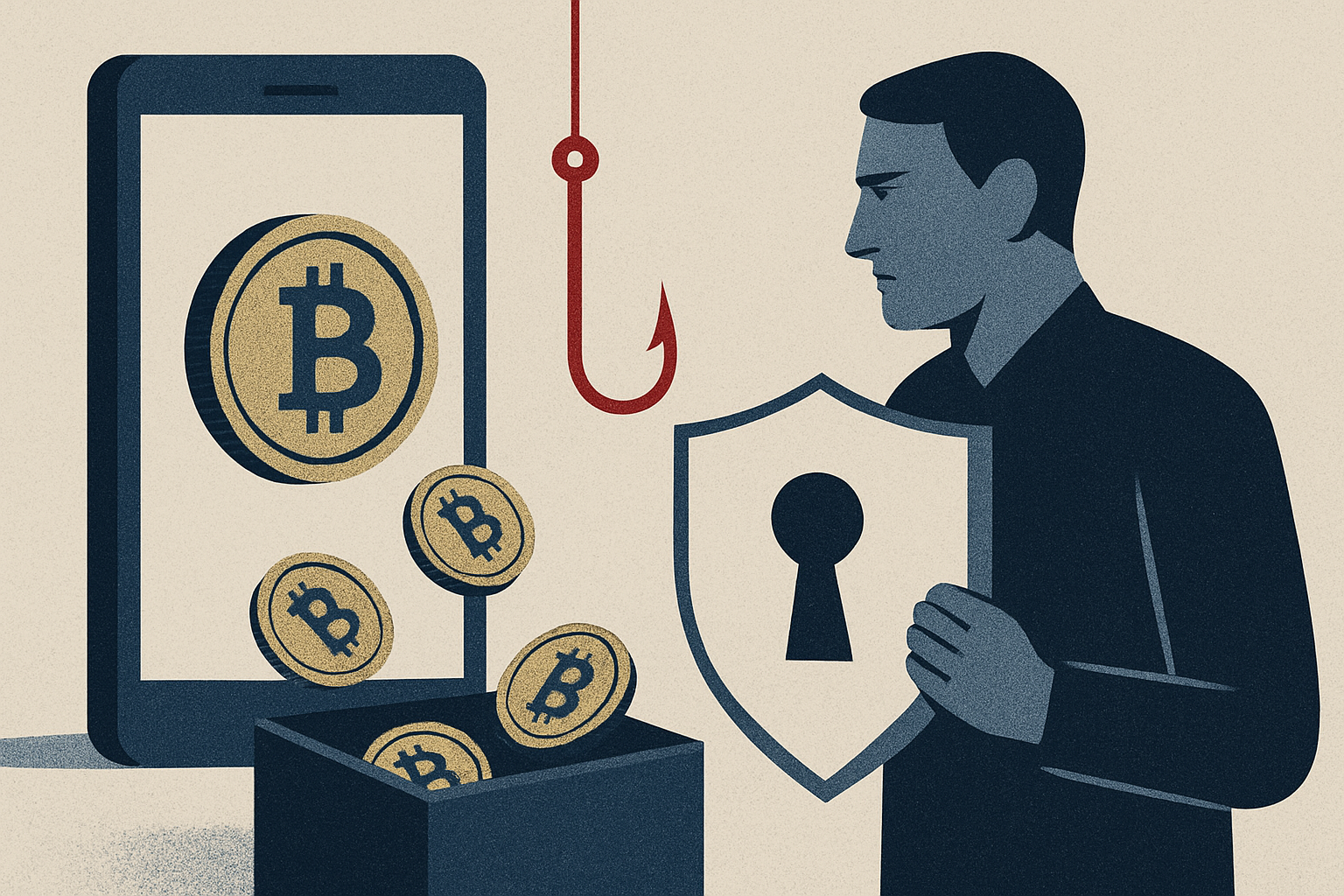
Cryptocurrency exchange scams have become one of the most financially devastating forms of fraud in the United States — and the numbers keep climbing. The FBI's 2025 Internet Crime Report shows cyber-enabled crimes defrauded Americans of nearly $21 billion, with cryptocurrency and artificial intelligence-related complaints among the costliest. Within that broader crisis, crypto fraud stands out: Americans who submitted complaints involving cryptocurrency reported the highest losses, with 181,565 complaints totaling more than $11 billion. What makes these scams especially dangerous is how convincingly they mimic legitimate investment activity — and how many victims never see it coming. As of April 2025, the FBI's Operation Level Up had notified 5,831 victims of cryptocurrency investment fraud, 77% of whom were unaware they were being scammed.
What Are Cryptocurrency Exchange Scams and How Do They Work
Cryptocurrency exchange scams are sophisticated schemes in which fraudsters convince victims to funnel money into fraudulent investment platforms disguised as legitimate crypto trading environments. "Cryptocurrency investment scams are sophisticated long-term scams using psychological manipulation, the appearance of legitimacy, and exploitation of cryptocurrencies to deceive victims into investing large sums of money," according to the FBI's 2025 Internet Crime Report. The mechanics follow a predictable, layered playbook: once the scammer convinces a victim to participate, they instruct the victim to open a cryptocurrency account at a reputable exchange, transfer money from a traditional bank account into that crypto account, convert the funds into a cryptocurrency type the scammer specifies — such as Bitcoin, ETH, Tether, or USDC — then open an account on a fraudulent "investment platform" and deposit the cryptocurrency there. These fake platforms are engineered to appear credible: they exist in the form of what appear to be traditional websites, accessible via the web or through a specific browser only accessible via cryptocurrency applications. A particularly insidious variant is the "pig butchering" scam: scammers "fatten" victims by slowly building trust before "butchering" them and taking their money. Most of these scams are perpetrated by organized criminal enterprises based in Southeast Asia that exploit victims of human trafficking as forced labor to run the operations. A secondary — and growing — threat is the fake recovery scam: fictitious law firms or government officials target cryptocurrency scam victims claiming to help recover lost funds, and in some cases fraudsters have even impersonated IC3 employees, with the IC3 gathering more than 10,500 complaints about recovery scams last year and an estimated $1.4 billion in losses.
Warning Signs to Watch For
Recognizing a cryptocurrency exchange scam before money changes hands is your best defense. The following red flags should trigger immediate skepticism. First, watch for unsolicited contact — scammers typically initiate relationships through social media, dating apps, or messaging platforms before steering conversations toward investment opportunities. If an unknown individual contacts you, do not release any financial or personal identifying information and do not send any money — and do not invest per the advice of someone you meet solely online. Second, beware of fake platform domains: be on the lookout for domain names that impersonate legitimate financial institutions, especially cryptocurrency exchanges, as misspelled URLs with a slight deviation from the actual institution's website may be fake. Third, watch for pressure to use cryptocurrency kiosks (Bitcoin ATMs). In typical IC3 complaints involving cryptocurrency kiosks, criminals give detailed instructions to individuals, including how to withdraw cash from their bank, how to locate a kiosk, and how to deposit and send funds using the kiosk. Consumers over the age of 60 are more than three times as likely as younger adults to report losing money to Bitcoin ATM scams, with a median loss of $10,000. Fourth, be alert to AI-enhanced manipulation: the FBI has warned that chat generators and deepfakes are becoming increasingly lifelike, making fraud detection harder — especially when fraudsters manipulate a victim's emotions to generate panic and quicker action. Finally, distrust any platform that promises guaranteed high returns or that makes it easy to see profits but impossible to withdraw funds.
How to Protect Yourself
Protection starts with healthy skepticism and a few firm personal rules. Never invest based solely on the advice of someone you've only met online, regardless of how long you've communicated with them or how convincing their track record appears. Verify the validity of any investment opportunity from strangers or long-lost contacts on social media websites. Before using any cryptocurrency trading platform, confirm that it is registered with the appropriate financial regulators — in the U.S., check the SEC's EDGAR database or FINRA's BrokerCheck. Do not download or use suspicious-looking apps as a tool for investing unless you can verify their legitimacy. If you receive a call, text, or letter urging you to send cryptocurrency to "protect" your savings or "unlock" a return, treat it as a scam. If you are using a cryptocurrency kiosk and the kiosk operator calls you to explain that your transactions are consistent with fraud and advises you to stop sending money, you should stop or cancel the transaction immediately. Remember that older adults are disproportionately targeted: Americans over 60 reported approximately $7.7 billion in losses to online crime in 2025, up 37% from 2024. Share this awareness with elderly family members and community networks.
What to Do If You're Targeted
Speed is critical if you suspect you are being — or have been — victimized. Act immediately by ceasing all transfers and do not send additional funds, even if a scammer claims a final payment is needed to unlock your profits. Document everything: record the name of the scammer or company, methods of contact, dates of contact, methods of payment, where funds have been sent, and a thorough description of all interactions. Then report it. The IC3 receives nearly 3,000 complaints per day — if you believe you or someone you know may have been a victim, contact your local FBI office or submit a complaint at ic3.gov as soon as possible. If funds were sent via a cryptocurrency kiosk, keep any receipts or cryptocurrency transaction documentation, and file a complaint with the IC3 at www.ic3.gov in addition to reporting to your local police department. Also alert your bank or financial institution immediately, as there may be a narrow window to halt wire transfers. Be especially wary of anyone who contacts you after the fact offering to recover your lost funds — this is almost certainly a secondary scam. The financial and emotional toll of cryptocurrency fraud is immense, but reporting every incident, even when recovery seems unlikely, helps law enforcement dismantle the criminal networks behind these schemes and protect future victims.