Fake Job Offer Scams: How Fraudsters Target Job Seekers
Fake job offer scams cost Americans $501M in 2024. Learn how employment fraud works, the red flags to spot, and how to protect yourself today.
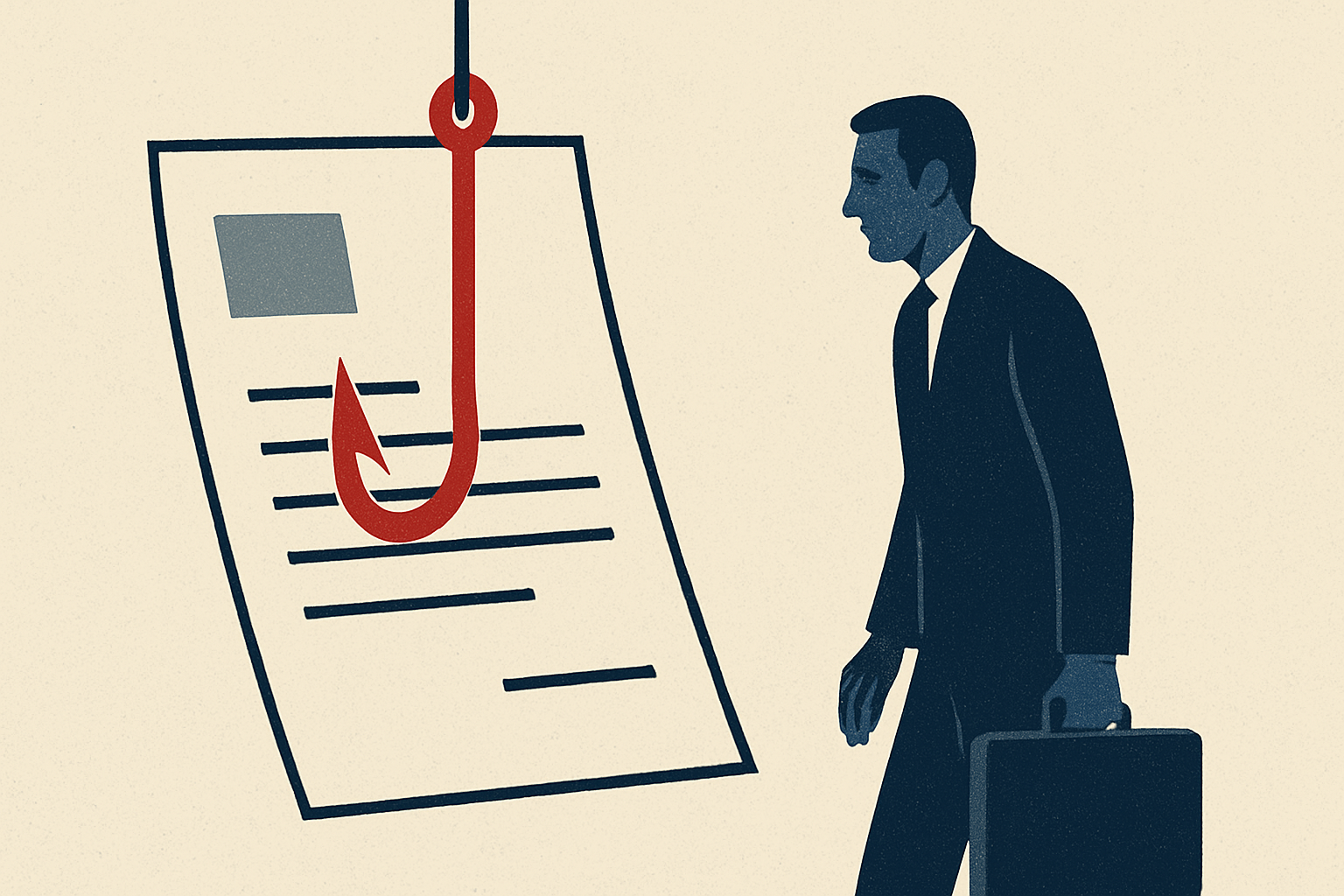
The job market has always attracted opportunists — but today's fake job offer scams have evolved into a sophisticated, billion-dollar criminal industry. Reports to the FTC about job scams tripled from 2020 to 2024, with reported losses skyrocketing from $90 million to $501 million over that same period. Meanwhile, the FBI's Internet Crime Complaint Center (IC3) recorded 20,044 employment scam victims in 2024 alone, with losses exceeding $264 million — a 276% increase from 2023. These are not clumsy, easy-to-spot cons. They are professionally engineered traps designed to exploit one of the most vulnerable human states: the urgent need for income. If you are job searching right now, this article could save you thousands of dollars — and your identity.
What Is This Fraud and How It Works
Fake job offer scams are a form of employment fraud in which criminals impersonate legitimate employers, staffing agencies, or recruiters to deceive job seekers into surrendering money, personal information, or both. Fraudsters have increasingly used job offers made through text messages and job board sites like LinkedIn and ZipRecruiter to make victims believe they are dealing with a legitimate employer. The scam typically unfolds in stages. First, the victim receives an unsolicited text, WhatsApp message, or DM claiming to be from a recruiter at a well-known company, often advertising a remote position with attractive pay. Once contact is made, scammers engage in identity theft, wire fraud, and employment schemes designed to gain access to an applicant's bank account or banking information. A particularly fast-growing variant is the 'task scam' — also called a gamified job scam — where the FBI warns that fraudsters offer fake work-from-home jobs involving simple, repetitive tasks such as rating restaurants or clicking a button to 'optimize' a service. The scam's trap is a confusing compensation structure that requires victims to make cryptocurrency payments to 'unlock' work, with payments going directly to the scammer. A fake dashboard shows the victim accumulating earnings they can never actually withdraw. Some victims pour thousands of dollars into these platforms over weeks before realizing the entire balance was fictional. Task scams alone accounted for nearly 40% of all job scam reports tracked by the FTC in 2024, surging from just 5,000 reports in all of 2023 to 20,000 reports in only the first half of 2024.
Warning Signs to Watch For
Recognizing a fake job offer before engaging is your best defense. Here are the clearest red flags investigators and regulators have identified: Unsolicited outreach via text, WhatsApp, or Telegram — legitimate employers do not recruit this way. An offer arrives without any formal interview or application process; job seekers have reported going from submitting an application to receiving a text-based 'interview' and a full offer letter the same day. The pay rate is dramatically above the industry norm for minimal, vague work. The 'recruiter' communicates only through personal email addresses (Gmail, Yahoo) or third-party messaging apps rather than official company channels. You are asked for sensitive personal information — Social Security number, bank account details, government-issued ID, or ID.me login credentials — early in the process, often framed as routine onboarding. Identity criminals are specifically known to ask job seekers for their ID.me login information, since numerous federal and state agencies use ID.me to verify identities, meaning a thief who obtains it can impersonate you across government systems. You receive a check for too much money with instructions to send back the difference, or you are asked to make a cryptocurrency deposit to 'activate' your account or access your earnings. An interview request includes a link to download software — which may install malicious spyware on your device. Scammers also use clever variants of a real company's name, spoofed websites, and lookalike email addresses to appear credible, making it genuinely difficult to distinguish their fake opportunity from a real one without careful verification.
How to Protect Yourself
The FTC and FBI have issued clear, actionable guidance for job seekers. First and most fundamentally: never pay to get a job. Legitimate employers do not charge applicants for training, equipment, certifications, background checks, or any other expense — and staffing agencies charge the hiring company, not the candidate. Ignore unsolicited job offers received by text, WhatsApp, or Telegram; real employers will not contact you this way. Do not reply to or click links in these messages, since even engaging with the sender can mark you as an active target for further scam attempts. Stick to reputable job search platforms and apply directly through verified company career pages. For every promising listing, search the company's name along with the word 'scam,' 'review,' or 'complaint' to surface any prior victim reports. Never share your Social Security number, bank account information, or ID.me credentials before you have formally accepted a verified offer and have independently confirmed the employer's identity. When you have doubts, contact the company's HR department directly using a phone number or email you found yourself on the official company website — not from any link or number provided by the recruiter. Demand a live video interview with cameras on; if the other party refuses or makes excuses, treat that as a serious warning sign. Higher-risk groups — including job seekers aged 18 to 34, remote work seekers, and those actively searching in a difficult market — should apply extra scrutiny to any opportunity that arrives through social media or unsolicited messages.
What to Do If You're Targeted
If you believe you have been targeted or victimized by a fake job offer scam, act quickly and systematically. Stop all communication with the fraudster immediately. If you shared financial information, contact your bank or credit card company right away to freeze or flag affected accounts. If you disclosed your Social Security number, place a fraud alert with the three major credit bureaus — Equifax, Experian, and TransUnion — and consider a full credit freeze. If you shared your ID.me credentials, contact ID.me immediately to secure your account. Preserve all evidence: save copies of every message, email, document, and screenshot before deleting anything. Report the scam to the FTC at ReportFraud.ftc.gov and file a complaint with the FBI's Internet Crime Complaint Center at ic3.gov. You should also notify your state attorney general's office. If the scammer impersonated a real company, alert that company's HR or fraud department directly — doing so can help them warn other job seekers. The FBI received 20,044 employment scam reports in 2024, and the FTC received 130,075 victim reports that same year. Reporting matters: your complaint contributes to investigations that can shut down these operations and protect others who are still vulnerable. Remember, falling for one of these scams is not a reflection of intelligence — fraudsters deliberately target people during one of the most stressful, hope-laden periods of life, and they are professionals at exploiting that vulnerability.
- 01Job Scams | Consumer Advice— FTC
- 02Scammers Defraud Individuals via Work-From-Home Scams (PSA240604)— FBI / IC3
- 03ITRC: Online Job Scams Remain One of the Most Reported Scams to the Center— Identity Theft Resource Center (ITRC)
- 04Job Offer or Fraud? How Skyrocketing Employment Scams Target Job Seekers— Synovus (citing FBI IC3 Internet Crime Report 2024)