Fake Job Offer Scams: How to Spot and Avoid Them
Fake job offer scams cost Americans $501 million in 2024. Learn how employment fraud works, the red flags to watch, and how to protect yourself today.
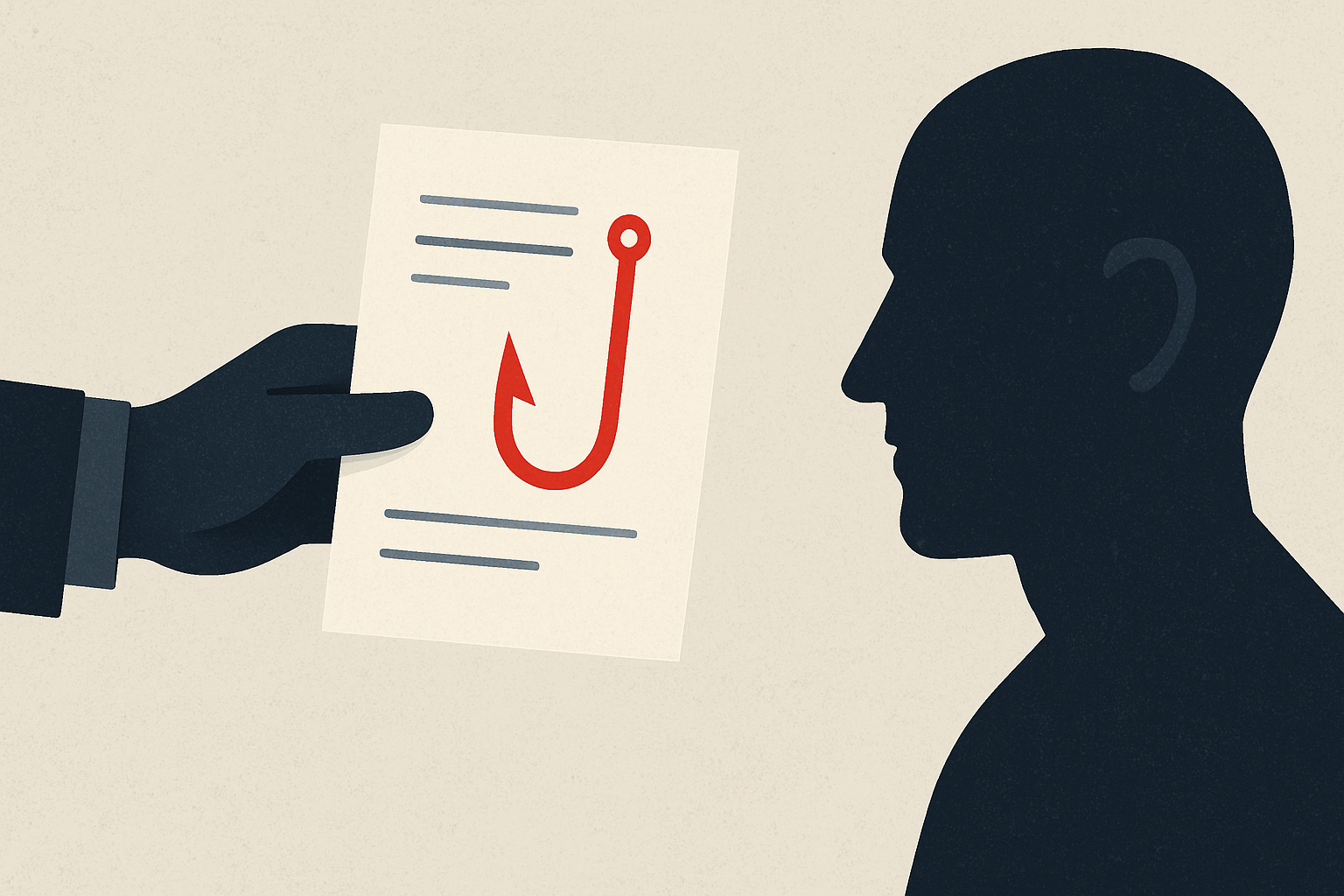
If you are searching for a new job, you are also in the crosshairs of one of the fastest-growing fraud categories in the United States. Reports to the FTC about job scams nearly tripled between 2020 and 2024, with reported consumer losses skyrocketing from $90 million to $501 million over that same period [1]. The FBI received 20,044 employment scam complaints in 2024 alone, while the FTC received 130,075 victim reports in that same year [4]. What was once a fringe threat has exploded into a full-scale epidemic — and the scammers behind it are getting smarter, faster, and more convincing by the day.
What Are Fake Job Offer Scams and How Do They Work?
Fake job offer scams occur when bad actors trick job seekers into providing money or personal information by posing as employers, recruiters, or job placement agencies [3]. These scams often promise high-paying jobs with urgent hiring timelines, minimal qualifications, or the ability to work from home [3]. The approach is rarely blunt — scammers invest time in building trust before moving in for the kill. The scams typically begin with a tailored, unsolicited text message or WhatsApp message that looks legitimate and personalized [4]. Fake recruiters claim to represent well-known companies and advertise roles like 'online assessor,' 'product reviewer,' or 'remote data entry specialist' [2]. Once contact is established, victims are walked through a convincing onboarding process that may include a scripted 'interview,' fake offer letters on spoofed company letterhead, and requests for sensitive personal data. A particularly dangerous and fast-growing variant is the 'task scam' or 'gamified scam,' in which victims are shown a polished app interface where they appear to earn money by completing simple online tasks such as liking videos or rating images. The app displays accumulating fake earnings — but when the victim tries to withdraw funds, they are told they must first deposit cryptocurrency. That deposit is stolen [4]. FBI reports showed a 276% increase in money lost to employment scams between 2023 and 2024, rising from $70 million to more than $264 million [4].
“Scammers are always 'hiring,' but they don't actually want to employ you.” — Federal Trade Commission, Consumer Advice
Who Is Being Targeted?
Anyone actively searching for work is at risk, but scammers deliberately seek out the most vulnerable. They target new job-seekers, those re-entering the workforce after a gap, immigrants unfamiliar with U.S. hiring norms, and people drawn to flexible, remote-work arrangements [4]. A recent survey found that one in four people who looked for a job in 2025 fell victim to a hiring scam, with approximately half of all victims having money or personal information stolen [1]. Older adults aged 70 and above, while reporting fewer incidents, tend to suffer significantly higher median losses per scam — up to $1,650 [2]. The FBI's IC3 has also flagged AI-generated content — including fake company websites, synthetic recruiter profiles, and even deepfake video interviews — as an accelerating vector in employment fraud, making it increasingly difficult to distinguish real recruiters from fraudulent ones [4].
Warning Signs to Watch For
Recognizing a fake job offer before it causes harm requires vigilance at every stage of the 'hiring' process. The following are the most reliable red flags, drawn from FTC and law enforcement guidance. First, you were never asked to apply — legitimate employers do not cold-contact job seekers out of the blue via text or social media [2]. Second, the job promises unusually high pay for minimal effort, particularly for vague remote tasks. Third, the recruiter asks you to pay for training materials, equipment, background checks, or 'starter kits' before you can begin working [3]. No legitimate employer requires upfront payment from a new hire. Fourth, the contact uses a personal or non-corporate email account — such as Gmail or Yahoo — rather than a verified company domain [2]. Fifth, the 'employer' requests sensitive personal data — including your Social Security number, bank routing details, or copies of a government-issued ID — before any formal interview or background check process [3]. Sixth, you are asked to receive packages and reship them, to open a new bank account, or to handle money on the company's behalf [3]. Finally, in task scams specifically, be suspicious of any app or platform that shows you accumulating earnings but requires a cryptocurrency deposit before you can withdraw them [4].
“Real employers won't ask for that kind of information before they've actually interviewed and hired you.” — Federal Trade Commission, Consumer Advice
How to Protect Yourself
The best defense against fake job offer scams is a combination of skepticism, verification, and safe digital habits. Start by independently verifying any company that contacts you: search the official company website directly — do not use links provided in a text or email — and call the publicly listed HR department to confirm the recruiter's identity and whether the posted position is real [3]. Never click links in unsolicited job-offer texts or emails, and never reply to them, as engaging with the sender can flag you for further targeting [2]. If a job offer arrives via WhatsApp, Telegram, or an unknown number rather than through a verifiable company channel, treat it as a major warning sign [1]. Never send money for any reason in connection with a job offer. Legitimate employers do not charge applicants for training, equipment, or onboarding [1]. Protect your personal data: do not provide your Social Security number, banking details, or government ID copies unless you have independently confirmed the employer is real and you have signed a formal, verified offer letter. Be especially cautious on social media — the FTC reports that 1 in 3 job scam victims in 2025 said their scam started on a social media platform [2]. Finally, trust your instincts: if a recruiting interaction feels rushed, vague, or too good to be true, it almost certainly is.
What to Do If You Are Targeted
If you suspect you have encountered a fake job offer, act immediately and deliberately. Do not send any additional money or personal information, and cease all communication with the supposed recruiter [3]. Preserve everything: save screenshots of messages, emails, and any documents you received, as these are critical evidence. Report the scam to the FTC at ReportFraud.ftc.gov and file a complaint with the FBI's Internet Crime Complaint Center at IC3.gov [3]. If you have already shared financial account information, contact your bank or credit union immediately to freeze or monitor the account. If you disclosed personally identifiable information such as your Social Security number, review your credit reports for unauthorized activity and consider placing a credit freeze with all three major bureaus [3]. Be aware that scammers sometimes monitor social media for victims who post about their experience — they may then approach you posing as a 'fraud recovery' service and attempt to scam you a second time [3]. Your report matters: every complaint filed with the FTC and FBI helps investigators identify patterns, take enforcement action, and potentially protect the next victim.
- 01Job Scams | Consumer Advice— Federal Trade Commission (FTC)
- 02That job offer text is probably a scam | Consumer Advice— Federal Trade Commission (FTC)
- 03Attorney General Bonta Alerts Californians to Job Recruitment Scams— California Department of Justice
- 04Job Offer or Fraud? How Skyrocketing Employment Scams Target Job Seekers— Synovus (citing FBI IC3 Internet Crime Report 2024)