Grandparent Scam: Protect Elderly Family Now
Grandparent scams cost victims millions annually. Learn how AI voice-cloning works, the red flags to spot, and how to protect elderly family members today.
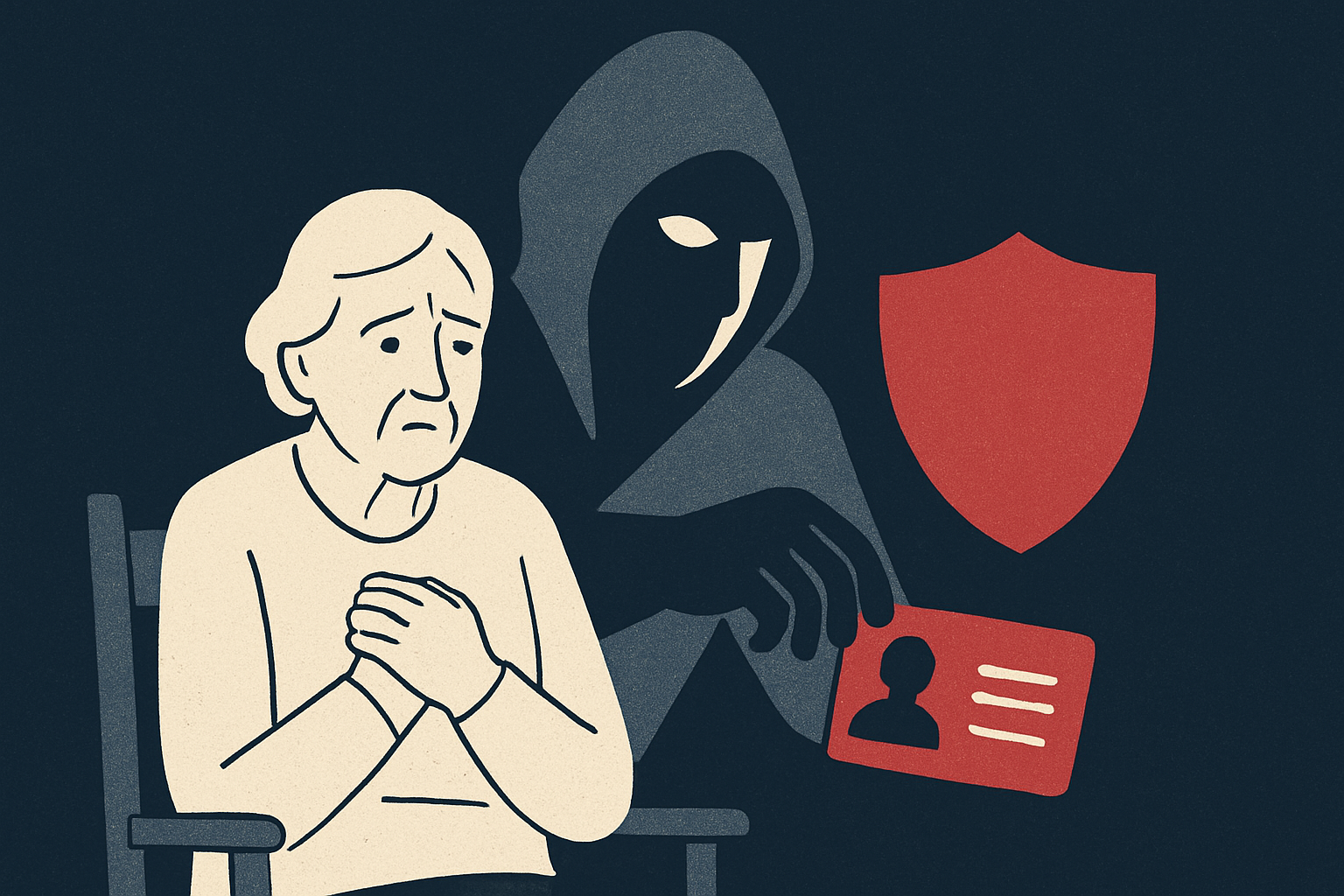
Picture this: the phone rings at 9 p.m. A panicked voice identifies itself as your grandson. He's been in a car accident, he's in police custody, and he desperately needs bail money — tonight. The voice sounds real. The fear in it sounds real. And that urgency overrides every instinct you have to stop and think. This is the grandparent scam, and it is one of the most psychologically devastating forms of elder fraud operating in America today. With the arrival of AI voice-cloning technology, what was once a crude impersonation play has become a near-perfect simulation of a loved one in crisis — and the financial damage is surging.
What Is the Grandparent Scam and How Does It Work
The grandparent scam — which the FBI formally classifies as a 'distress scam' — works by convincing an older adult that a grandchild or close relative is in immediate legal or physical danger and needs emergency funds sent right away. Scammers open with a vague hook ('Grandma, it's me!'), wait for the victim to fill in a name, then run with it. Once they've established the false identity, a second caller typically joins — posing as a lawyer, bail bondsman, or police officer — to lend institutional legitimacy to the demand. In a high-profile 2025 federal case, U.S. immigration enforcement charged 25 Canadian nationals who ran grandparent scam call centers out of Montreal, Quebec, defrauding elderly victims in more than 40 states of over $21 million. Victims received calls from people falsely posing as a grandchild arrested after a car crash who needed bail money — and were sometimes told a 'gag order' prevented them from telling anyone else in the family. Couriers then arrived at victims' homes to collect cash. The sophistication of these operations is striking: when Canadian law enforcement executed search warrants, investigators found defendants actively placing calls to elderly victims in real time. Authorities now warn that scammers are increasingly using AI-generated voice technology to clone the voices of real grandchildren, sourced from social media videos and voice messages — making the emotional deception virtually indistinguishable from a real call.
The Staggering Financial Toll on Older Americans
The scale of financial harm inflicted on older adults by fraud — including grandparent scams — has reached crisis proportions. Total fraud losses reported by adults aged 60 and over increased roughly fourfold from 2020 to 2024, skyrocketing from approximately $600 million in 2020 to $2.4 billion in 2024, according to the FTC's Protecting Older Consumers 2024–2025 report to Congress. By 2025, that trend had accelerated further: people aged 50 and older reported $4.3 billion in fraud losses compared with $2.3 billion among younger adults, per AARP's analysis of FBI and FTC data. The FBI specifically identified $893 million in losses tied to AI-related scams in 2025 — including voice-cloning used for 'family in distress' calls — with older adults accounting for $352 million of those losses. Perhaps most alarming, the FBI found average losses of approximately $38,500 per victim among Americans 60 and older in 2025, nearly double the figure for younger filers. These figures almost certainly undercount the true damage: as the FBI's Internet Crime Complaint Center has noted, reported losses represent only a fraction of what scammers actually steal, since most elder fraud goes unreported.
Warning Signs to Watch For
Recognizing a grandparent scam in progress is the single most important line of defense. The warning signs are consistent and well-documented: (1) Emotional urgency and panic — the call conveys extreme distress and demands immediate action, leaving no time to think or verify. (2) A plea for secrecy — scammers nearly always instruct the victim not to tell other family members, often inventing a 'gag order' or claiming that alerting others could make the situation worse. If someone pressuring you for money asks you to keep it secret from your family, that is a defining red flag of this scam. (3) Unusual payment demands — grandparent scammers overwhelmingly request cash, wire transfers, cryptocurrency, or gift cards. These payment methods leave no trace and cannot be reversed. In 2024, 33% of older adults who reported losing $10,000 or more to impersonation scams paid via cryptocurrency, and many report scammers sending couriers directly to their homes to collect cash. (4) A familiar-but-off voice — even with AI voice cloning, the cadence, word choice, or emotional tenor of the 'grandchild' may feel slightly wrong. Trust that instinct. (5) A secondary authority figure — a fake lawyer, bail agent, or federal officer who 'takes over' the call to add pressure and credibility is a classic escalation tactic.
How to Protect Elderly Family Members
Protection begins with proactive family conversations — before any scam call ever arrives. Here is what security professionals and federal agencies recommend: Establish a family code word. Agree on a secret word or phrase that only real family members know. If a caller claiming to be a grandchild cannot produce the code word, hang up immediately. Call back on a known number. If you receive any distressing call, hang up and call your grandchild or their parent directly using a number already saved in your phone — never the number provided by the caller. The FTC advises: 'Don't trust the voice.' Limit what you share on social media. The FDIC warns that scammers actively mine social media profiles for names, birthdays, and daily routines of relatives to make their impersonations more convincing. Locking down privacy settings on Facebook and other platforms removes this raw material from their hands. Set up a trusted contact at your bank. Financial institutions can flag unusual withdrawals, especially large cash transactions, and a designated trusted contact gives your bank someone to call if activity looks suspicious. Never send cash, gift cards, or wire transfers to resolve a supposed legal emergency. No legitimate bail bondsman, lawyer, or law enforcement agency will demand payment via gift card or ask a courier to collect cash at your front door. Report and resource up. The National Elder Fraud Hotline (1-833-FRAUD-11), run by the Department of Justice and supported by the Office for Victims of Crime, is staffed by professionals trained specifically to assist older fraud victims — including helping them file reports with the FBI's IC3, which can in some cases freeze funds in transit.
What to Do If You or a Loved One Is Targeted
If you suspect a grandparent scam is in progress or has already occurred, act fast and without shame. First, do not send any additional money — stop all transactions immediately and contact your bank to flag or reverse any recent transfers if possible. Second, call the real grandchild or family member at a known phone number to verify the story in under two minutes. Third, report the incident to the FTC at ReportFraud.ftc.gov and to the FBI's Internet Crime Complaint Center at IC3.gov. As the DOJ has noted, a timely IC3 report has the potential to freeze fraudulently transferred funds, though this cannot be guaranteed. Older adults aged 60 or over can also call the National Elder Fraud Hotline at 1-833-FRAUD-11 for free, expert assistance. Finally, resist the shame spiral. Elder fraud victims — particularly grandparent scam victims — are often reluctant to report because they fear losing their independence or being judged by family. These scams are engineered by sophisticated criminal organizations that specifically exploit love and fear. Being targeted is not a failure of intelligence; it is evidence that the scam worked exactly as designed. The most powerful thing you can do after being targeted is to report it, so investigators can disrupt the next call center before it reaches the next grandparent.
- 01False alarm, real scam: how scammers are stealing older adults' life savings— FTC
- 0225 Canadian nationals connected to nationwide multi-million dollar "grandparent scam" charged in Vermont— ICE / DOJ
- 03FTC Issues Annual Report to Congress on Agency's Actions to Protect Older Adults— FTC
- 04Older Adults Hit Hard by Fraud in 2025— AARP