Grandparent Scam: Protect Your Elderly Family
Learn how the grandparent scam targets seniors, the warning signs to recognize, and proven steps to protect your elderly loved ones from this devastating fraud.
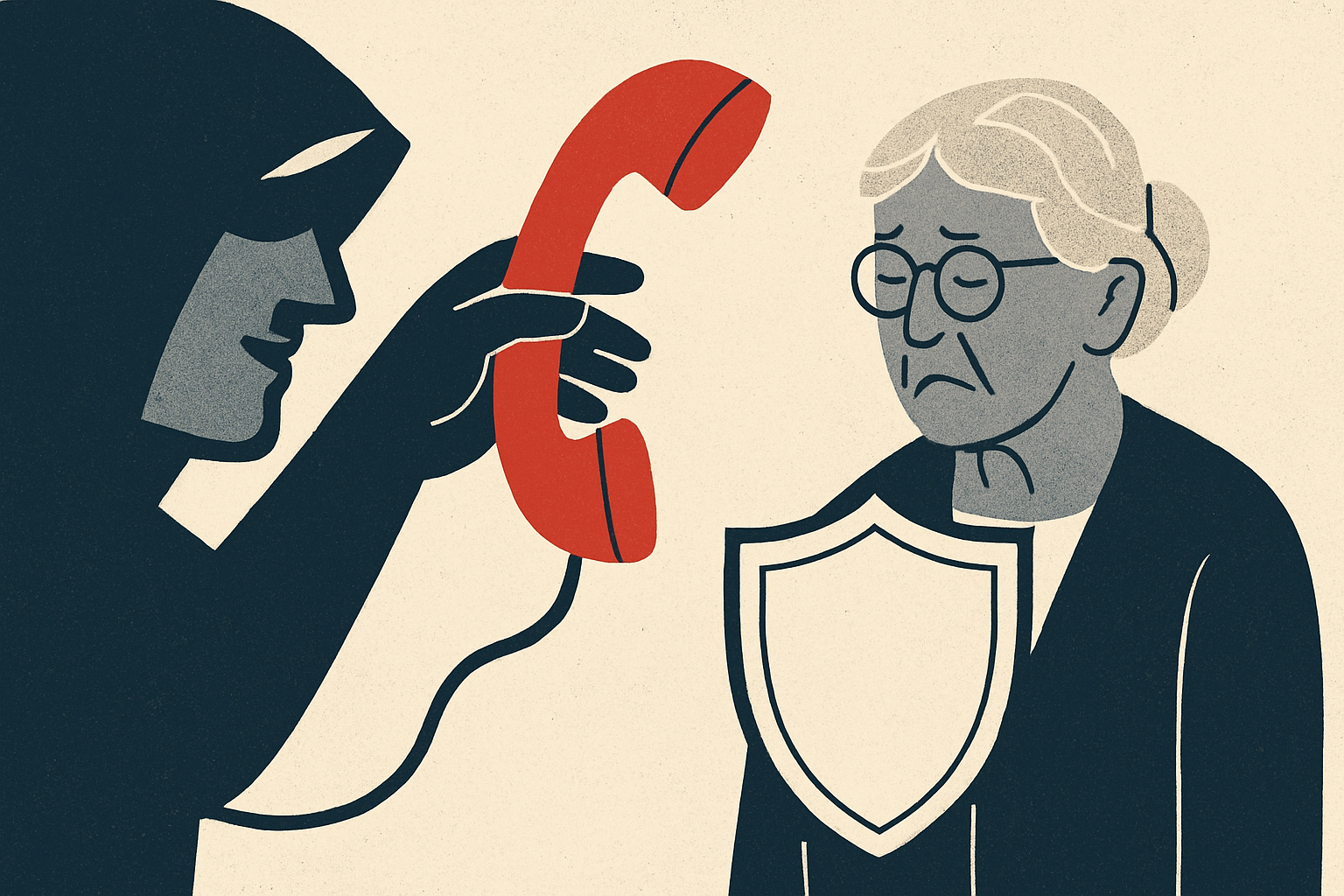
Every year, thousands of grandparents receive a terrifying phone call — a panicked voice claiming to be a grandchild in crisis, desperately needing money. The grandparent scam is one of the most emotionally manipulative and financially devastating fraud schemes targeting older Americans today. According to the FBI, elder fraud costs victims over $3 billion annually, with the grandparent scam representing a significant and growing share of those losses. Understanding how this scam works — and how to build defenses against it — is one of the most important steps families can take to protect their most vulnerable members.
What Is the Grandparent Scam and How It Works
The grandparent scam is a social engineering attack that exploits the deep love and protective instincts seniors have for their grandchildren. The scheme typically begins with an unexpected phone call, often late at night or early in the morning when the target is disoriented and more emotionally reactive. The caller claims to be a grandchild — or sometimes an attorney, police officer, or bail bondsman acting on a grandchild's behalf — and describes an urgent emergency. Common scenarios include being arrested for a DUI, being involved in a car accident, or being stranded abroad. The caller urgently requests money and demands strict secrecy, instructing the grandparent not to tell other family members to avoid embarrassment or legal complications. Fraudsters harvest personal details from social media platforms to make their stories more convincing, using real names, travel plans, and family relationships to build false credibility. Payment is typically requested via wire transfer, gift cards, cryptocurrency, or even cash delivered to a courier — all methods that are nearly impossible to trace or recover. More recently, scammers have evolved to use AI-generated voice cloning technology, creating eerily accurate imitations of a grandchild's actual voice using audio scraped from social media videos, making the deception extraordinarily difficult to detect in the moment.
Warning Signs to Watch For
Recognizing the hallmarks of the grandparent scam is the first line of defense. The most critical red flag is any urgent request for money combined with a demand for secrecy. Legitimate emergencies do not require loved ones to stay silent — that pressure is a deliberate manipulation tactic designed to prevent the victim from seeking a second opinion. Other warning signs include a caller who provides vague or inconsistent details about the emergency, insists on unconventional payment methods like gift cards or cryptocurrency, or becomes aggressive and emotionally escalating when questioned. A caller who discourages the grandparent from verifying the story — for example, by saying 'Don't call mom, she'll just worry' — should be considered a serious warning indicator. Seniors should also be suspicious when a caller volunteers the grandchild's name only after the grandparent says it first, a common technique where the fraudster responds to 'Is this Danny?' with an immediate 'Yes, Grandma, it's me.' The story may also involve secondary callers posing as authority figures such as lawyers or law enforcement, lending a false air of legitimacy to the scheme.
How to Protect Your Elderly Family Members
Proactive education and open communication are the most powerful tools in preventing grandparent scams. Families should have calm, non-alarmist conversations with elderly relatives about this fraud before it ever happens, normalizing the idea that it's acceptable — and smart — to hang up, verify, and call back. Establishing a family code word is a highly effective countermeasure; if a grandchild ever faces a real emergency, they would know to use the word, and the absence of that word is an immediate red flag. Encourage seniors to resist the urgency manufactured by callers. Fraudsters engineer panic specifically to short-circuit rational thinking. A simple rule — 'I will always hang up and call you back directly before sending any money' — can stop a scam in its tracks. Families should also review the privacy settings on elderly relatives' social media profiles, limiting the personal information accessible to strangers. Consider setting up a trusted contact with financial institutions; many banks now allow account holders to designate a person who can be notified if suspicious activity is detected. Organizations such as AARP's Fraud Watch Network offer free resources and a helpline specifically for elder fraud, and enrolling seniors in scam-awareness programs can build long-term resilience.
What to Do If You or a Loved One Is Targeted
If a grandparent receives a call matching this pattern, the immediate priority is to slow down and verify independently. Hang up, find the grandchild's actual phone number through a trusted source — not a number provided by the caller — and call directly. Contact other family members to confirm the grandchild's whereabouts. If money has already been sent, act immediately: contact the bank or wire transfer service to attempt a recall, report the fraud to the FTC at ReportFraud.ftc.gov, file a complaint with the FBI's Internet Crime Complaint Center (IC3) at ic3.gov, and notify your local law enforcement. If gift cards were used, contact the card issuer directly — some companies have fraud recovery programs. Time is critical; the faster a report is made, the greater the chance of intervention. Emotional support is equally important after a scam. Victims frequently experience shame, embarrassment, and self-blame, which can prevent them from reporting the crime. Families should respond with compassion and understanding, emphasizing that these fraudsters are sophisticated criminals who deliberately prey on love — not on weakness. Reporting these crimes also contributes to broader law enforcement efforts to dismantle the criminal networks behind elder fraud.
- 01FBI Warns of Scammers Targeting Senior Citizens in Grandparent Scams and Demanding Funds by Wire, Mail, or Couriers— FBI / IC3
- 02False alarm, real scam: how scammers are stealing older adults' life savings— FTC
- 03'Grandparent' Scams Get More Sophisticated— FCC
- 04Scammers Target Older Adult Victims— FBI