Identity Theft Warning Signs: Know Before It's Too Late
Identity theft hit 1.1 million reports in 2024. Learn the critical identity theft warning signs and how to protect yourself before criminals strike.
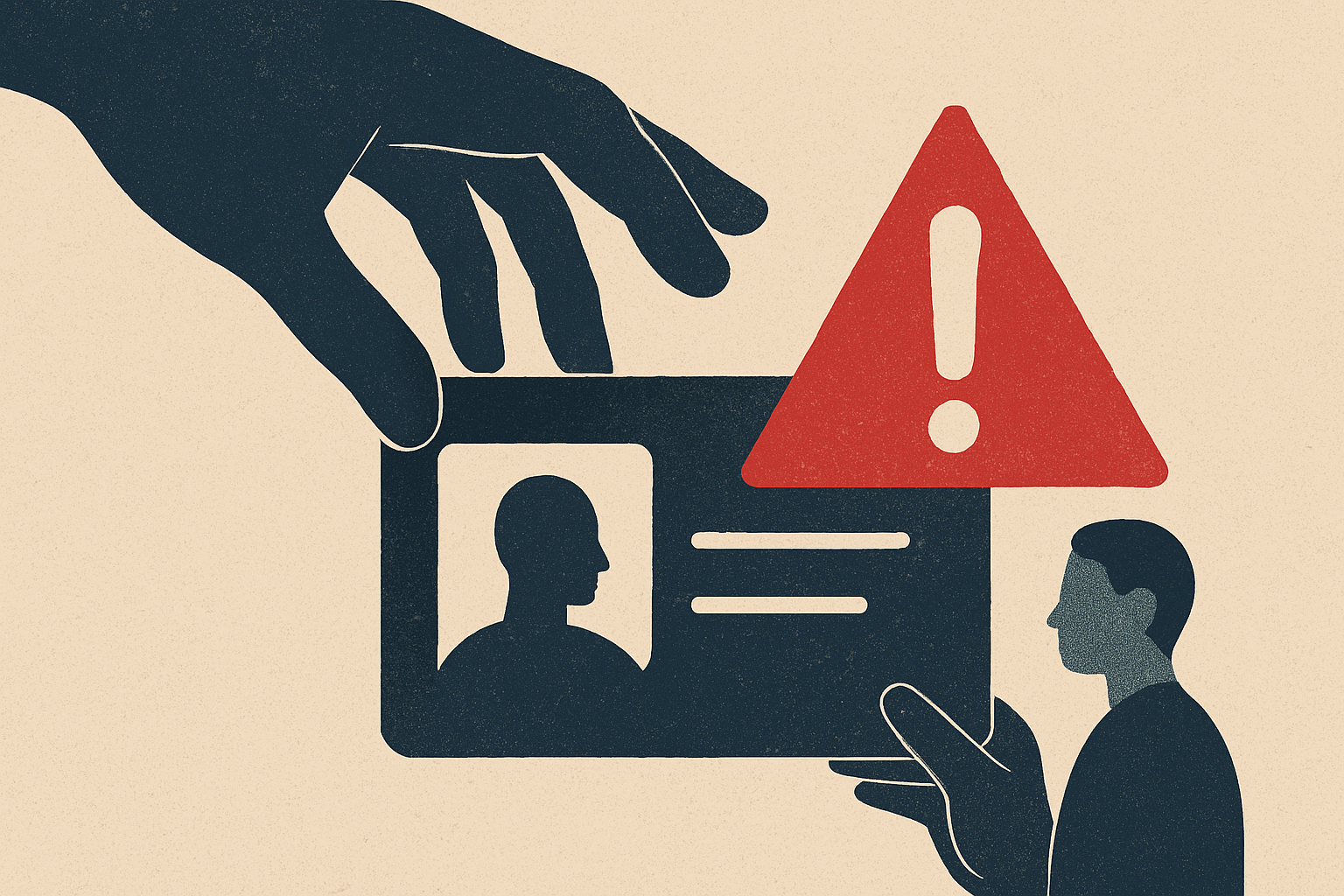
Identity theft is no longer a fringe crime affecting a handful of unlucky victims — it is a sprawling, industrialized fraud epidemic. In 2024, there were more than 1.1 million reports of identity theft received through the FTC's IdentityTheft.gov website. At the same time, the FBI's 2024 Internet Crime Report combined information from 859,532 complaints of suspected internet crime and detailed reported losses exceeding $16 billion — a 33% increase in losses from 2023. Behind every statistic is a real person blindsided by a crime that often goes undetected for months. The most powerful weapon you have against identity thieves is early recognition. Knowing the warning signs can mean the difference between a quick recovery and years of financial and legal damage.
What Is Identity Theft and How It Works
Identity theft happens when someone steals personal information about you — such as your Social Security number or credit card information — and uses it to commit fraud. Criminals obtain this information through data breaches, phishing emails, physical mail theft, account takeover schemes, and dark web purchases of stolen credentials. Once armed with your personal data, they can drain your bank account, run up charges on your credit cards, open new utility accounts, or get medical treatment on your health insurance. An identity thief can also file a tax return in your name and collect your refund. What makes identity theft especially dangerous is how it scales: 2024 had the second-highest number of data compromises in the U.S. in a single year since the Identity Theft Research Center began tracking data events in 2005. A single mega-breach can expose millions of consumers at once, fueling a wave of downstream fraud that victims may not notice for months.
Warning Signs to Watch For
Catching identity theft early requires knowing what to look for across your financial, medical, and government records. Here are the most critical red flags:
**Unfamiliar charges on your accounts.** Unexplained withdrawals or purchases on your bank or credit card statements are among the most obvious and immediate signals. Even small "test" charges — often just a dollar or two — can indicate a thief probing your account before making larger transactions.
**Hard inquiries and new accounts you didn't open.** Hard credit inquiries that you did not initiate are a strong sign that someone is attempting to open accounts using your personal information. New credit cards, store accounts, or loans appearing on your credit report confirm identity theft has already occurred.
**Unexpected bills or collection calls.** Receiving bills for medical services, utilities, or loans you never applied for is a serious indicator. Calls from debt collectors about debts you don't recognize should never be dismissed as clerical errors.
**Tax return anomalies.** If the IRS rejects your tax return because one has already been filed under your Social Security number, a thief has stolen your identity to claim your refund. The FTC recommends going to IdentityTheft.gov to report it immediately, where you can create an identity theft report and an affidavit for the IRS to launch an investigation.
**Unexpected government benefit notifications.** If you are contacted by an unemployment office about a claim you didn't file, it may be more than a clerical error — notify the unemployment office and also alert your employer of the potential fraud.
**Data breach notifications.** Don't ignore letters or emails informing you that your data was exposed in a breach. The ITRC's 2025 Data Breach Report found that 88% of breach notification recipients experienced at least one negative consequence, including targeted phishing attempts and account takeover attempts.
**Locked out of existing accounts.** If your login credentials suddenly stop working, a thief may have changed the password after compromising your account.
How to Protect Yourself
Prevention is far less costly than recovery. The Javelin 2024 study found that consumers spent an average of 10 hours resolving identity fraud, and that timeline increases the longer fraud goes undetected. These proactive steps dramatically reduce your exposure:
**Monitor your credit reports regularly.** Federal law entitles every consumer to one free credit report per year from each of the three major bureaus through AnnualCreditReport.com, and reviewing your report at least quarterly can help you catch unauthorized activity before it snowballs.
**Place a credit freeze.** A credit freeze is the gold standard for preventing new account fraud. It restricts lenders from accessing your credit file without your explicit permission, making it nearly impossible for a thief to open credit in your name.
**Use strong, unique passwords and multi-factor authentication.** Reusing passwords across accounts creates a domino effect when any single site is breached. Enable multi-factor authentication (MFA) on every account that offers it, especially email, banking, and government portals.
**Be skeptical of unsolicited contact.** The top three cybercrimes by number of complaints reported by victims in 2024 were phishing/spoofing, extortion, and personal data breaches. Never provide personal or financial information in response to unsolicited calls, texts, or emails — no matter how official they appear.
**Secure your mail and physical documents.** Mail theft remains a low-tech but effective identity theft vector. Use a locked mailbox, shred sensitive documents, and opt for electronic statements wherever possible.
**Watch for synthetic identity tactics.** Emerging hybrid identity theft behaviors — including platform abuse, synthetic identity tactics, and multi-channel account misuse — are increasingly being flagged in FTC data, meaning traditional monitoring alone may not be sufficient.
What to Do If You're Targeted
Speed is everything when responding to identity theft. The moment you suspect your identity has been compromised, act on all of the following steps simultaneously:
**Report to IdentityTheft.gov.** The FTC's dedicated identity theft portal walks you through a customized recovery plan, generates official reports, and connects you with the right agencies. Place a fraud alert or credit freeze, report the suspected theft at IdentityTheft.gov, and notify affected financial institutions within 24 hours.
**File with the FBI's IC3.** If your identity theft involves online crime or financial fraud, file a complaint at IC3.gov. The FTC uses the reports it receives through the Sentinel network as the starting point for many of its law enforcement investigations, and shares these reports with federal, state, and local law enforcement professionals across the country.
**Contact your financial institutions.** Call the fraud department at every bank and credit card company where you hold accounts. Ask them to freeze or close compromised accounts and issue new account numbers.
**Place a fraud alert or credit freeze with all three bureaus.** Contact Equifax, Experian, and TransUnion. A fraud alert is free and requires creditors to verify your identity before opening new accounts; a credit freeze offers stronger protection.
**Document everything.** Keep a detailed log of every call, letter, and report filed — including dates, names, and reference numbers. This paper trail is essential if you need to dispute fraudulent accounts or debts in the future.
Identity theft is not a crime you can afford to wait out. Identity theft reports filed between January and September 2025 already exceeded the total number filed in all of 2024 — a stark reminder that this threat is accelerating, not retreating. Staying vigilant, acting fast, and using every official resource available are your best defenses.
- 01New FTC Data Show a Big Jump in Reported Losses to Fraud to $12.5 Billion in 2024— Federal Trade Commission
- 02FBI Releases Annual Internet Crime Report— Federal Bureau of Investigation
- 03Signs of Identity Theft: 10 Warning Signs to Watch For— OmniWatch
- 04Facts + Statistics: Identity Theft and Cybercrime— Insurance Information Institute