Identity Theft Warning Signs: Spot It Early
Identity theft affects millions of Americans yearly. Learn the critical identity theft warning signs and how to protect yourself before serious damage is done.
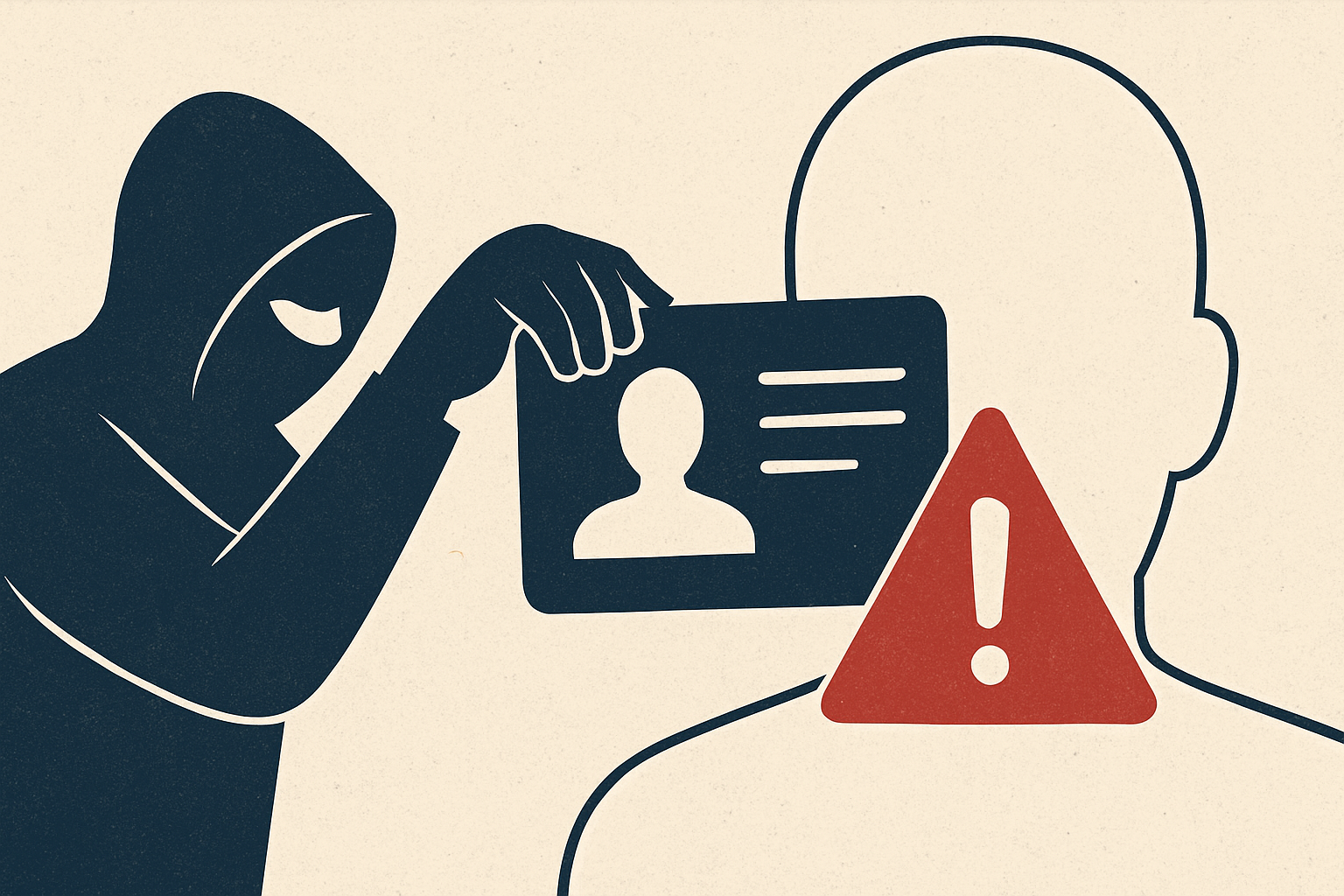
Identity theft is no longer a fringe crime affecting a handful of unlucky victims — it is a mass-scale industry operating around the clock. The Federal Trade Commission received more than 1.1 million identity theft reports in 2024 alone, making it the second most frequently reported consumer issue that year. Meanwhile, the FBI's Internet Crime Complaint Center logged $16.6 billion in total cybercrime losses in 2024, a 33% increase over 2023, with personal data breaches ranking among the top three complaint categories. What makes identity theft especially dangerous is its stealth: victims often discover the damage weeks, months, or even years after it begins. That is precisely why recognizing the warning signs early is your most powerful line of defense.
What Is Identity Theft and How Does It Work
Identity theft happens when someone uses your personal or financial information without your permission. That information can include your Social Security number, bank account credentials, credit card numbers, date of birth, medical insurance ID, or even your driver's license number. Once criminals have what they need, they can drain your bank account, run up charges on your credit cards, open new utility or loan accounts in your name, get medical treatment on your health insurance, or file a tax return to intercept your refund. Thieves obtain this information through a variety of channels: phishing emails and texts, card skimmers installed at ATMs and fuel pumps, data breaches, mail theft, public Wi-Fi interception, and old-fashioned dumpster diving through discarded bank statements or tax documents. Increasingly, criminals use AI-enabled personalization in phishing and impersonation scripts to make their attacks far more convincing — the FBI's IC3 documented more than 22,000 AI-facilitated fraud complaints in its most recent annual report, and noted that AI involvement is likely substantially undercounted because most victims never recognize it. Credit card fraud was the single most-reported form of identity theft in 2024, with 449,076 complaints — an increase of 7.8% from 2023 — encompassing both account takeovers and fraudulent new account openings.
Warning Signs to Watch For
The challenge with identity theft is that the red flags are easy to overlook or rationalize away. Here are the key signals that should prompt immediate investigation:
**Unfamiliar charges on bank or credit card statements.** Unusual withdrawals or purchases you do not recognize are among the most common and visible first signs of account compromise. Even small, seemingly innocuous charges can indicate a thief is testing a stolen card before making larger purchases.
**Unknown accounts or inquiries on your credit report.** When you pull your credit report and find accounts you never opened, or hard inquiries from lenders you never contacted, someone may have already used your identity to apply for credit. Checking your credit report regularly is essential — you are entitled by federal law to free reports from Equifax, Experian, and TransUnion.
**Bills or mail that stop arriving.** If statements, checks, or correspondence you normally receive suddenly disappear, a thief may have submitted a mail-forwarding request or is intercepting your physical mail to harvest account information.
**Notification of a data breach.** A letter or email alerting you that your information was exposed in a corporate breach does not mean fraud has already occurred — but it signals your data is likely now on the dark web and you should act immediately.
**Unexpected government notices.** Receiving a notice that unemployment benefits were filed in your name, or a letter from the IRS stating that a second return was already submitted under your Social Security number, is a serious red flag. Tax-related identity theft remains one of the most prevalent and damaging subtypes.
**Denial of credit, insurance, or employment you expected to receive.** If applications you believe should be approved are suddenly denied, an identity thief may have already damaged your credit history or left a fraudulent paper trail.
**Medical bills for treatment you never received.** Medical identity theft occurs when someone uses your insurance to obtain care. The first sign is often an Explanation of Benefits (EOB) statement from your insurer listing services you never used, or a collection notice for a medical debt you do not recognize.
**Calls from debt collectors about unknown debts.** Debt collectors contacting you about accounts you have no memory of opening are a strong indicator that fraudulent accounts have been running in your name, possibly for some time.
How to Protect Yourself
Prevention is the most cost-effective form of identity theft response. The Federal Trade Commission and federal consumer protection agencies recommend layering several defenses:
**Freeze your credit.** A credit freeze — also called a security freeze — prevents new accounts from being opened in your name and is free to place and lift at all three major bureaus under federal law. This is the single most powerful preventive tool available to consumers.
**Monitor your accounts and credit reports actively.** Set up real-time transaction alerts with your bank and credit card issuers. Review your free annual credit reports from AnnualCreditReport.com, and consider staggering them across the three bureaus to gain year-round coverage.
**Guard your Social Security number.** Never carry your Social Security card in your wallet. Share your SSN only when absolutely required, and question any entity that asks for it unnecessarily.
**Shred sensitive documents.** Charge receipts, credit card offers, bank statements, and tax documents should all be cross-shredded before disposal to prevent dumpster-diving thieves from harvesting your information.
**Use strong, unique passwords and multi-factor authentication.** Credential stuffing — where thieves try breached usernames and passwords on other sites — is a leading driver of account takeovers. A password manager and MFA make this attack vector far less effective.
**Be skeptical of unsolicited contacts.** Whether by email, text, or phone, never provide personal or financial information in response to an unsolicited contact. Social media is now the primary fraud contact method for identity theft in most age groups, so exercise caution there too.
**Secure your mail.** Use the USPS Informed Delivery service to preview expected mail digitally, making it easier to spot if something has been intercepted. Consider a locked mailbox or a P.O. Box for sensitive correspondence.
What to Do If You're Targeted
Speed matters enormously when identity theft has occurred. The faster you act, the more damage you can limit. The FTC's dedicated recovery portal at IdentityTheft.gov is your first stop: it generates a personalized, step-by-step recovery plan tailored to your specific type of identity theft, covering more than 30 distinct categories. Key immediate steps include:
**Place fraud alerts and credit freezes.** Contact all three major credit bureaus — Equifax, Experian, and TransUnion — to place both a fraud alert (which requires businesses to verify your identity before extending credit) and a full credit freeze. The fraud department at your bank and credit card issuers should also be notified immediately.
**File an FTC report.** Reporting to the FTC at IdentityTheft.gov creates an official Identity Theft Report, which you will need when disputing fraudulent accounts, communicating with creditors, or working with law enforcement.
**File a police report.** In cases of significant fraud, a local police report provides additional legal documentation that can be essential for resolving disputes with creditors and financial institutions.
**For tax identity theft, contact the IRS.** If a fraudulent tax return has been filed using your information, file IRS Form 14039 (the Identity Theft Affidavit). This initiates an investigation and will invalidate the fraudulent return. The IRS may also issue you an IP PIN — an Identity Protection PIN — to secure future filings.
**For medical identity theft, contact your insurer and providers.** Request a full accounting of benefits paid in your name and dispute any fraudulent claims in writing. Ask for corrections to your medical records to ensure inaccurate health information tied to the thief's treatment does not follow you.
Remember: identity theft losses among Americans aged 60 and older surged approximately 70% in the FBI's most recent reporting period, underscoring that this crime does not spare any demographic. Whether you are 25 or 75, the same vigilance applies. Catching the warning signs early — and responding decisively — is what separates a recoverable setback from a years-long financial nightmare.
- 01What To Know About Identity Theft - FTC Consumer Advice— FTC
- 02Identity theft | USAGov— USAGov
- 03FBI Releases Annual Internet Crime Report— FBI
- 042025 Identity Theft Statistics: A Record Year For Fraud— OmniWatch / FTC Data