Lottery & Prize Scams: Tactics Used in 2025
Lottery and prize scams cost consumers millions every year. Learn the exact tactics scammers use, the red flags to watch for, and how to protect yourself.
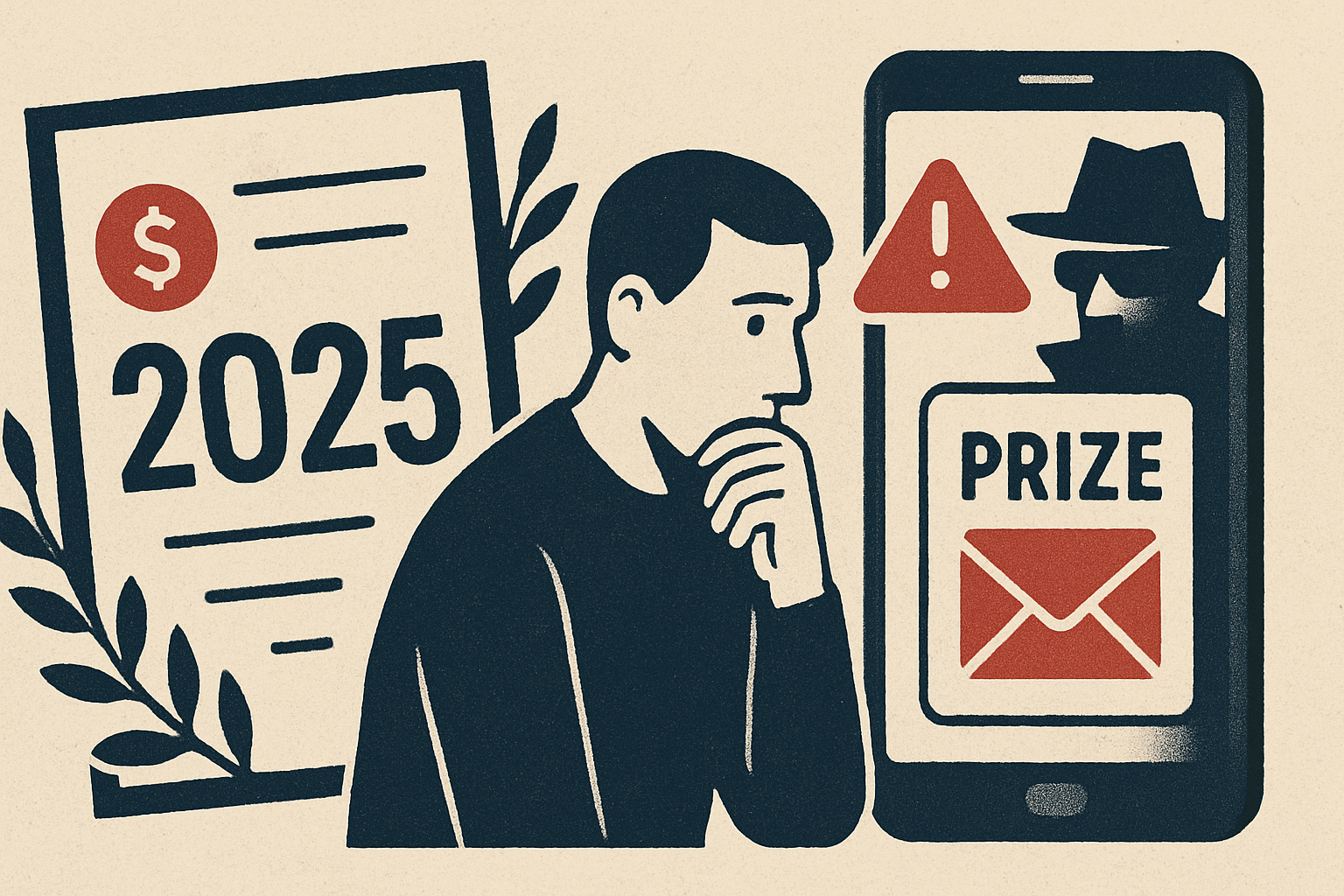
You didn't enter any contest. You haven't bought a ticket. And yet your phone buzzes with a message: "Congratulations — you've been selected as our prize winner!" It feels exciting for a split second — and that split second is exactly what scammers are counting on. Lottery and prize scams are among the most persistently effective fraud schemes in operation today, combining psychological pressure, impersonation, and financial sleight of hand to strip victims of real money in exchange for a prize that never existed. According to the FTC's 2024–2025 report to Congress, older adults are disproportionately targeted by prize, sweepstakes, and lottery scams — and the financial damage is anything but trivial. Understanding how these schemes work is the first line of defense.
What Is This Fraud and How It Works
At its core, a lottery or prize scam is deceptively simple: a victim receives an unsolicited notification — by text, email, phone call, letter, or social media message — claiming they have won a sweepstakes, lottery, or valuable prize such as an iPad, a new car, or a large sum of cash. The scammer's next move always involves asking the victim to pay money or hand over account information before the "prize" can be released. If the victim pays, they lose their money and discover there was never any prize at all.
One common variant involves advance fees disguised as legitimate costs. Scammers instruct victims to pay for "taxes," "shipping and handling charges," "processing fees," or "customs duties" to unlock their winnings. Real prizes are free — no legitimate sweepstakes or lottery requires an upfront payment of any kind to claim a win.
Another dangerous variant exploits social media. Scammers impersonate real lottery winners on platforms like Facebook, using the names of actual jackpot winners to make posts seem credible. If a user replies, the scammer moves them off-platform, asks for a phone number, and then sends urgent texts demanding gift card payments for "processing and delivery fees" — a method that is nearly impossible to reverse or trace.
Foreign lottery pitches are also widespread. Scammers tell victims they have won a lottery in another country, or offer to sell them tickets. Beyond the obvious scam risk, it is illegal for U.S. citizens to play foreign lotteries — meaning victims who engage are being asked to break the law.
Perhaps the most audacious tactic involves impersonating government agencies. Scammers fabricate names like the "National Sweepstakes Bureau" or pose as actual federal agencies such as the FTC, creating the false impression that a prize is government-supervised and therefore legitimate. In one documented case, a victim physically showed up at FTC headquarters carrying a mailing that claimed the FTC had "certified and verified" his $5 million prize — a document the agency had nothing to do with.
In one of the largest enforcement actions of recent years, the FTC pursued a sweepstakes operation that extracted more than $28 million from consumers across the United States, Australia, Canada, France, Germany, Japan, and the United Kingdom. The scheme used personalized letters telling targets they had won a guaranteed prize of around $2 million, then demanded a fee of $20–$30 to collect — with warnings that the prize would be forfeited within ten days if payment was not received. A June 2024 settlement permanently banned the operators from ever running sweepstakes again.
Warning Signs to Watch For
The FTC identifies several reliable indicators that a prize notification is fraudulent. The single clearest red flag: you are asked to pay anything at all to receive your prize. Legitimate prizes never come with upfront costs, whether those costs are framed as taxes, insurance, processing, shipping, or legal fees.
Be especially wary if the notification arrives out of nowhere for a contest you never entered. You cannot win a lottery you did not play. A message claiming otherwise — particularly one involving a foreign lottery — should be treated as a scam by default.
Pressure tactics are another hallmark. Scammers deliberately impose countdown clocks and "act now" urgency to prevent you from pausing to think critically. Phrases like "limited time offer" or "your prize will be forfeited in 48 hours" are designed to override rational judgment.
The payment method requested is also a powerful signal. Fraudsters specifically steer victims toward irreversible payment channels — wire transfers, gift cards, or cryptocurrency — because these cannot be clawed back once sent. Only scammers demand gift cards as payment.
If someone claims to represent a government agency and asks for money in connection with a prize, that is a scam. No federal or state government agency will ever contact you to demand payment to release winnings. Similarly, if a supposed sweepstakes company contacts you asking for money or financial account information, you should independently look up the real company's contact details and verify the offer directly — never use contact information provided by the person reaching out to you.
Finally, watch for links and attachments in prize notifications. Clicking a malicious link or downloading a file in the excitement of a "win" can silently install malware that harvests your financial credentials and personal data long after the initial contact.
How to Protect Yourself
The most powerful protection against lottery and prize scams is a single rule: never pay to collect a prize. If any fee is requested before you can receive your winnings, stop all contact immediately.
Verify any prize claim independently. If a notification uses the name of a recognizable company or government agency, locate that organization's official website yourself — do not rely on contact details provided in the message — and call or email directly to confirm whether the promotion is real.
Be skeptical of unsolicited messages on all platforms. Fraudulent prize notifications arrive via text, email, phone, postal mail, and social media. Treat all of them with the same level of scrutiny, especially if you have no recollection of entering any contest.
Do not click links or download attachments in prize notification messages. Even if the email or text looks polished and official, these assets may deliver malware designed to compromise your device or steal login credentials.
Avoid engaging with social media posts that promise large cash giveaways from lottery winners. Even casually commenting on such posts can signal to scammers that you are a responsive target, leading to an escalating wave of fraud attempts in your feed and direct messages.
Monitor your credit report regularly for unfamiliar accounts or inquiries, particularly if you have previously engaged with a suspicious prize notification and shared any personal information. Early detection of identity theft can significantly limit the downstream damage.
What to Do If You're Targeted
If you receive a suspicious prize notification, the recommended response is straightforward: do not respond, do not send money, and do not share personal information. If you feel pressured on a phone call, hang up without apology.
If you have already sent money or disclosed financial information, act quickly. Contact your bank or financial institution immediately to secure your accounts and explore options for reversing any recent transactions. Then file a report with the FTC at ReportFraud.ftc.gov — every report contributes to the enforcement data that helps the agency identify and shut down active scam operations. You may also file a report with your local police department.
If the contact involved mail, you can also report to the U.S. Postal Inspection Service, which actively investigates mail fraud schemes including fake sweepstakes operations.
If personal identifiers such as your Social Security number, date of birth, or driver's license details were disclosed, place a fraud alert or credit freeze with the three major credit bureaus — Equifax, Experian, and TransUnion — and continue monitoring your credit report for unusual activity. The faster you act, the better your chances of containing the harm.
- 01Fake Prize, Sweepstakes, and Lottery Scams— FTC Consumer Advice
- 02FTC Action Leads to Sweepstakes Ban For Three Individuals Who Ran Massive Scheme That Cost Consumers Millions— FTC
- 03Free money on social media? Nah. It's a scam— FTC Consumer Advice
- 04FTC Issues Annual Report to Congress on Agency's Actions to Protect Older Adults— FTC