Medicare Fraud Schemes: How They Work in 2025
Medicare fraud costs taxpayers billions annually. Learn how genetic testing, DME, and telehealth scams work—and how to protect yourself and your benefits.
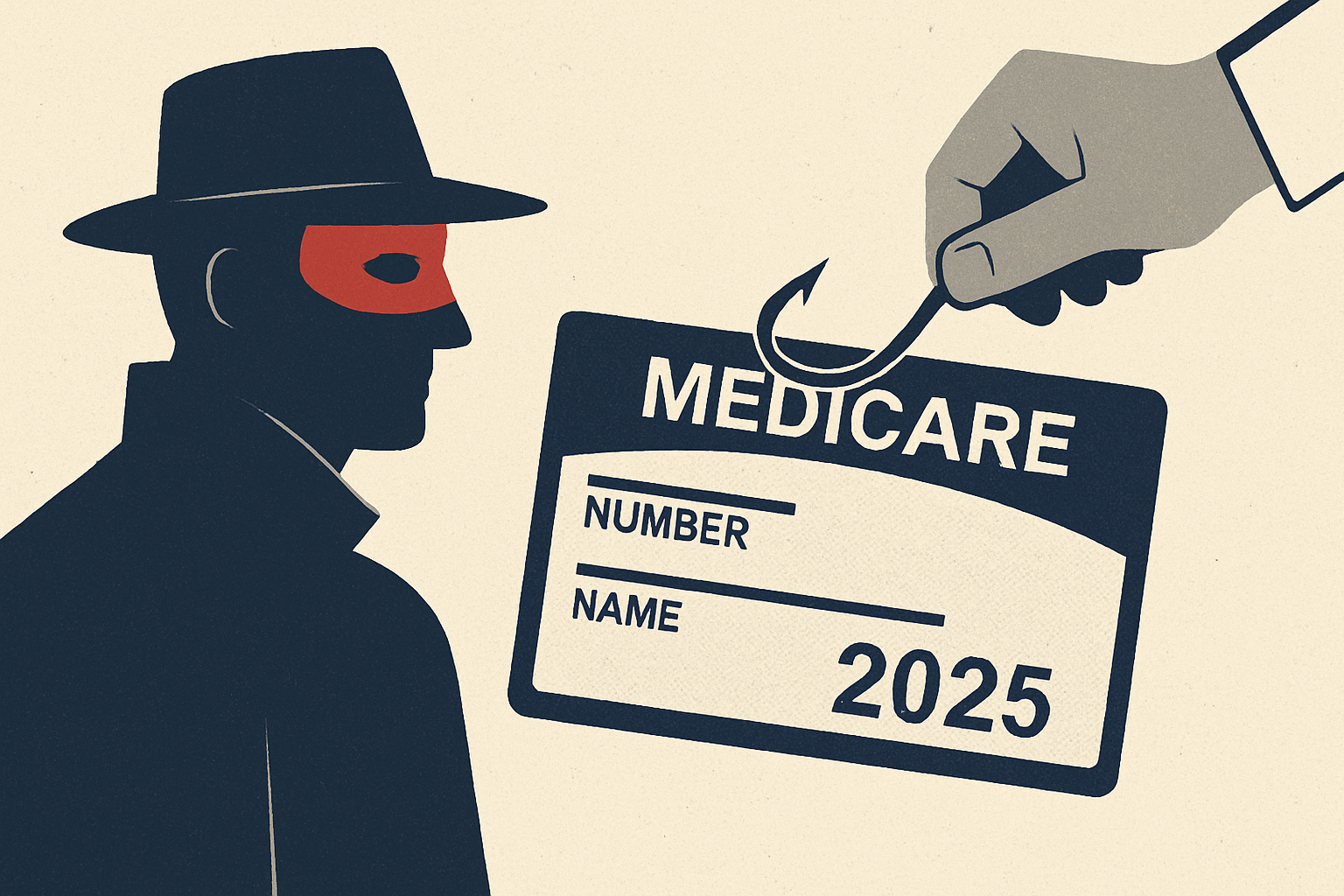
Medicare fraud is not a white-collar technicality—it is an organized criminal enterprise that drains billions from one of America's most vital safety-net programs, endangers patient health, and exposes millions of seniors to identity theft. In June 2025, the Department of Justice announced the largest coordinated healthcare fraud enforcement action in its history, with criminal charges against 324 defendants—including 96 licensed medical professionals—across 50 federal districts, tied to over $14.6 billion in alleged fraudulent claims. Yet that staggering figure represents only the schemes law enforcement managed to catch. Understanding how these scams operate is the first line of defense for every Medicare beneficiary, caregiver, and financial professional.
What Is Medicare Fraud and How It Works
Medicare fraud occurs when individuals or organizations knowingly submit false or misleading claims to Medicare in order to receive unauthorized payments. Fraudsters range from unscrupulous solo practitioners to vast transnational criminal organizations (TCOs). According to a March 2026 advisory issued jointly by the Treasury Department's Financial Crimes Enforcement Network (FinCEN), the FBI, and HHS-OIG, these schemes 'threaten the integrity of both the U.S. health care and financial systems' and impose enormous costs on taxpayers. Financial institutions filed 20% more suspicious activity reports related to healthcare fraud in 2025 than in 2024, a sign of how rapidly the threat is escalating.
Three fraud typologies dominate the current threat landscape:
**Durable Medical Equipment (DME) Fraud:** This is the single largest fraud category by dollar volume. In the 2025 DOJ Takedown alone, 'Operation Gold Rush'—a transnational scheme—accounted for over $10.6 billion in fraudulent Medicare claims for urinary catheters and other DME. In one documented case, CMS suspended payments to and later revoked the enrollment of 15 providers involved in a scheme that allegedly billed Medicare for more than $4 billion in urinary catheters that were never supplied. Scammers typically cold-call beneficiaries, offering free back braces, knee supports, or mobility aids, using high-pressure language such as 'your doctor has already approved it' or 'Medicare will cover everything.' Once a Medicare number is obtained, fraudulent billing begins immediately.
**Genetic Testing Fraud:** This rapidly growing scheme involves criminals soliciting Medicare beneficiaries—often at health fairs, senior centers, or community events—with offers of 'free' cheek swab tests for cancer screening, dementia detection, or heart disease risk. Once they obtain your Medicare number, they bill Medicare thousands of dollars for tests that were not medically necessary or ordered by your doctor. A 2026 HHS-OIG report found that genetic tests represented 43% ($3.6 billion) of all laboratory billing to Medicare in 2024. In the 2025 Takedown, 49 defendants alone were charged in connection with over $1.17 billion in allegedly fraudulent telemedicine and genetic testing claims.
**Telehealth and Telemedicine Fraud:** Fraudsters exploit telemedicine platforms by recruiting unethical providers—or impersonating them—to issue prescriptions and orders for services patients never needed or received. In one Florida case, the owner of a telemedicine and DME company was charged in a $46 million scheme in which Medicare beneficiaries were allegedly targeted through deceptive telemarketing campaigns, and then fraudulent claims were submitted for both DME and genetic tests. COVID-19 expanded telemedicine access dramatically, and fraudsters have exploited those waivers ever since.
**Kickback Schemes:** Fraudsters also pay illegal kickbacks to providers in exchange for patient referrals and fraudulent orders. One documented case involved providers billing Medicare over $4 billion for allografts—with the underlying company acquiring those products from tissue banks and relabeling them at a 2,000% markup—driven not by medical necessity but by kickbacks generating lavish profits for marketers and participating providers.
Warning Signs to Watch For
Recognizing the red flags of Medicare fraud can protect both your benefits and your identity. Be alert to the following warning signs:
**Unsolicited contact claiming to be from Medicare.** Medicare itself will never call you out of the blue to offer free equipment, tests, or plan upgrades. Any call, text, or email claiming to be 'Medicare' and asking for your Medicare number or personal information is a scam.
**'Free' offers that require your Medicare number.** Whether it's a free genetic test at a health fair, a free back brace over the phone, or a free consultation via telemarketing, no legitimate provider needs your Medicare number to give you something genuinely free.
**Pressure to act quickly or claims your 'doctor already approved it.'** Fraudsters use urgency and false authority to short-circuit your skepticism. Legitimate medical providers coordinate directly with your established physician.
**Services or equipment you didn't request, need, or receive.** Review your Medicare Summary Notice (MSN) or Explanation of Benefits (EOB) carefully after every billing period. Look for charges for services on dates you didn't have an appointment, equipment you never requested, or providers you've never heard of.
**Genetic testing offered outside a doctor's referral.** Medicare covers genetic testing only when it is deemed medically necessary to diagnose, treat, or manage a specific existing illness, and only when ordered by your treating physician. Testing offered at a parking lot, health fair, or via an unsolicited call is a hallmark of fraud.
**Scam activity spikes during Medicare open enrollment (October 15–December 7).** Fraudsters are most aggressive when beneficiaries are actively engaging with coverage decisions, so heightened vigilance is critical during that window.
How to Protect Yourself
The most powerful protection you have is treating your Medicare number like a credit card number—never share it unless you initiated the contact with a known, trusted provider.
**Guard your Medicare card.** Store your physical Medicare card securely and only carry it when you have a scheduled medical appointment. Never read your Medicare number aloud over the phone to an unsolicited caller.
**Verify before you comply.** If someone contacts you claiming to represent Medicare, a hospital, or a medical supplier, hang up and call the provider back using a number you independently verify from Medicare.gov or your insurance card.
**Review your Medicare Summary Notice every time you receive one.** The MSN is mailed quarterly and lists every service billed to Medicare on your behalf. Scrutinize it line by line and flag anything you don't recognize.
**Say no to 'free' tests or equipment from strangers.** Whether at a community event, through a mailer, or over the phone, never provide your Medicare number in exchange for a 'free' offer you didn't proactively seek.
**Work only with your established treating physician.** Any genetic test, DME order, or specialist referral should come from a doctor who knows your medical history. Be skeptical of telemedicine consultations with providers you've never met who recommend tests or equipment.
**Contact your State Health Insurance Assistance Program (SHIP) or Senior Medicare Patrol (SMP).** These free, federally funded programs can help you review your Medicare Summary Notice, spot potential fraud, and file a complaint.
What to Do If You're Targeted
If you suspect you have been targeted by or victimized by Medicare fraud, take action immediately—your report can protect other seniors and help law enforcement dismantle criminal networks.
**Report to 1-800-MEDICARE (1-800-633-4227).** The 24/7 helpline can flag suspicious activity on your account, correct fraudulent claims, and connect you with additional resources.
**File a complaint with HHS-OIG.** The Office of Inspector General maintains a hotline at 1-800-HHS-TIPS (1-800-447-8477) and an online complaint form at oig.hhs.gov. The HHS-OIG reported $7.13 billion in expected recoveries and receivables in FY 2024 alone, fueled in part by beneficiary tips.
**Contact the FTC at ReportFraud.ftc.gov.** The Federal Trade Commission tracks fraud patterns nationally and uses consumer reports to identify emerging schemes.
**Alert your Senior Medicare Patrol.** SMPs operate in every state and can help you navigate the reporting process and monitor your account for continued fraudulent activity.
**Place a fraud alert or freeze on your credit.** If your Medicare number was compromised as part of a broader identity theft, contact the three major credit bureaus—Equifax, Experian, and TransUnion—to place a protective freeze on your credit file.
**Document everything.** Save any suspicious mailers, voicemails, or text messages. Note the date, time, caller ID, and content of any suspicious contact. This documentation can be invaluable to investigators. The DOJ's newly created Health Care Fraud Data Fusion Center—launched as part of the 2025 Takedown—is specifically designed to synthesize tips and enforcement data to detect and prosecute emerging schemes faster than ever before.
- 01National Health Care Fraud Takedown Results in 324 Defendants Charged in Connection with Over $14.6 Billion in Alleged Fraud— U.S. Department of Justice
- 02FinCEN Issues Advisory on Health Care Fraud Schemes Targeting Medicare, Medicaid, and Other Federal and State Health Care Benefit Programs— FinCEN / U.S. Department of the Treasury
- 03Medicare: CMS's Use of Data Analytics to Identify and Prevent Fraud— U.S. Government Accountability Office (GAO)
- 04National Health Care Fraud Takedown Results in 455 Defendants Charged in Connection with Over $6.5 Billion in Alleged Fraud— U.S. Department of Justice