Medicare Fraud Schemes: How to Spot & Stop Them
Medicare fraud costs taxpayers billions annually. Learn how these schemes work, the warning signs to watch for, and how to protect your benefits from fraudsters.
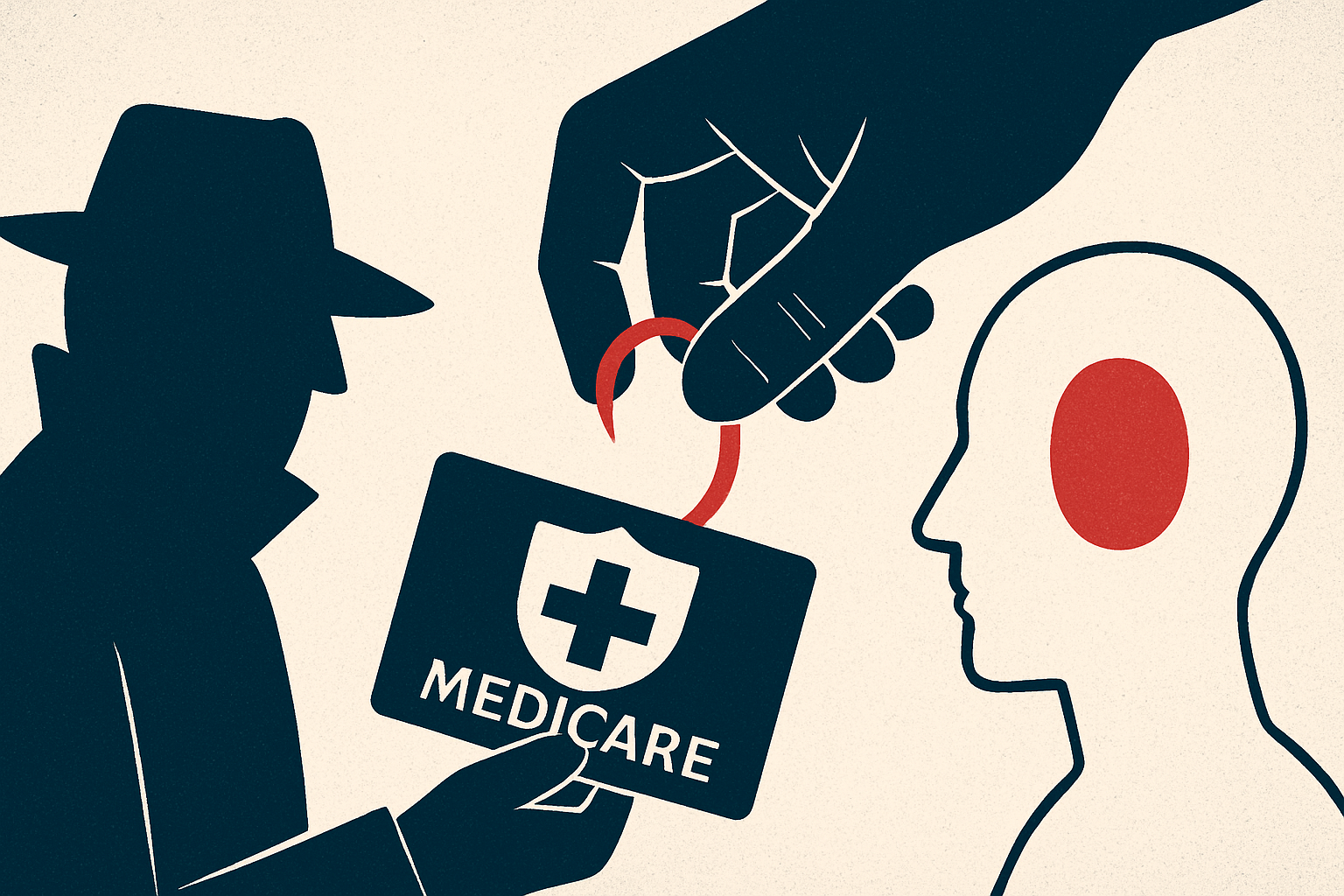
Medicare fraud is not a victimless crime — it drains billions from one of America's most vital safety-net programs, threatens the health of real patients, and puts sensitive personal data in the hands of criminals. In 2025 alone, the Department of Justice conducted what it described as a historic health care fraud takedown, charging 324 defendants — including 96 licensed medical professionals — across 50 federal districts for over $14.6 billion in alleged false billing. From transnational criminal organizations running ghost clinics to smooth-talking phone imposters targeting seniors during Medicare Open Enrollment, the threat landscape has never been more sophisticated or more dangerous. Understanding how these schemes work is the first line of defense.
What Is Medicare Fraud and How It Works
Medicare fraud occurs when someone knowingly and incorrectly bills Medicare for services or supplies to receive unauthorized benefits or payment. The schemes span a wide spectrum of actors — from individual bad-faith providers to organized criminal networks — and they exploit every part of the Medicare system.
**Phantom Billing** is the most common provider-side fraud: Medicare is charged for doctor visits, tests, or equipment that never took place or were never delivered. In a striking recent example, CMS suspended payments to and later revoked the enrollment of 15 providers involved in a scheme that allegedly billed Medicare for more than $4 billion in urinary catheters that were never supplied.
**Upcoding** involves a provider charging for a more expensive procedure or service than was actually performed — for instance, billing for a complex surgical consultation when only a basic check-in occurred.
**Durable Medical Equipment (DME) Fraud** is a perennial hotspot. A 2025 DOJ case revealed that one company acquired allografts from tissue banks, relabeled them, and charged Medicare up to $1,450 per square centimeter — a 2,000% mark-up — driven not by medical necessity but by kickbacks to participating providers.
**Fraudulent Genetic Testing Schemes** lure beneficiaries with promises of a 'free' cancer screening DNA swab. Fraudsters then submit claims for medically unnecessary tests supported by falsified documentation and illegal kickbacks.
**Telehealth and Prescription Drug Fraud** exploded during the COVID-19 pandemic and have persisted. Scammers posing as pharmacy benefit managers call beneficiaries offering special drug discounts, harvest Medicare numbers, and then bill Medicare for medications never shipped.
**Beneficiary-Targeted Scams** — including fake Medicare card replacement calls and 'free flex card' pitches — target seniors directly. Imposters pose as Medicare representatives, pressure victims to verify their Medicare Beneficiary Identifier (MBI), and use that number to commit billing fraud or full identity theft. Financial institutions filed a record of over 3,800 initial Suspicious Activity Reports checked for healthcare fraud in 2025, and reports of Medicare scam calls surged 40% in 2025 compared to 2024.
Warning Signs to Watch For
Recognizing a Medicare fraud attempt before handing over information is critical. Here are the most important red flags:
**Unsolicited contact asking for your Medicare number.** Medicare will not call you out of the blue to sell you something, threaten to cancel your benefits, or ask for your Medicare number or other personal information. If someone contacts you without you reaching out first and asks for your Medicare number or banking details, treat it as a red flag and hang up.
**Offers of 'free' equipment, tests, or services.** If a caller, door-to-door visitor, or pop-up ad promises free braces, wheelchairs, genetic tests, or flex cards in exchange for your Medicare number, that is a hallmark of DME and genetic testing fraud schemes.
**Urgency and pressure tactics.** Fraudulent callers routinely use artificial deadlines — 'your benefits will be cancelled tonight' — to prevent you from thinking critically. Real Medicare representatives do not threaten you.
**Spike in activity during Open Enrollment.** Fraudulent activity ramps up noticeably during the Medicare Open Enrollment Period (October 15 – December 7) each year, when beneficiaries are reviewing coverage options and are more likely to engage with callers claiming to offer plan upgrades.
**Unfamiliar charges on your Medicare Summary Notice (MSN).** Bills for services you did not receive, providers you have never visited, or dates when you were not treated are strong indicators that your Medicare number has been compromised and used to submit fraudulent claims. Most fraudulent billing goes undetected for weeks simply because beneficiaries do not check their statements regularly.
**'New Medicare card' activation requests.** Callers claim you need to activate a new plastic or chip-enabled card and ask for your MBI or bank information. Real Medicare does not call, text, or email out of the blue to ask for your numbers.
How to Protect Yourself
Protecting your Medicare benefits requires the same vigilance you would apply to your bank account or Social Security number.
**Guard your Medicare Beneficiary Identifier (MBI) like a credit card number.** Share it only with your treating physicians, your plan, or your licensed broker. Never give it to someone who contacts you first. If your MBI is compromised, CMS can issue you a new one — call 1-800-MEDICARE to ask.
**Verify all Medicare-related communications directly.** If you receive a suspicious call, letter, or email, hang up and call Medicare directly at 1-800-MEDICARE (1-800-633-4227) or visit Medicare.gov to verify. Do not use any phone number or link provided by the suspicious contact.
**Review your Medicare Summary Notice (MSN) monthly.** Log into your Medicare.gov account and scan for unknown dates, providers, or services. Report anything that looks unfamiliar immediately.
**Be skeptical of 'free' offers.** Medicare only covers tests and equipment ordered by your treating clinician for a documented medical need. Any unsolicited offer of free equipment or testing in exchange for your Medicare number is a fraud attempt.
**Create and secure your Medicare.gov account.** In 2025, CMS flagged unauthorized Medicare.gov accounts that had been created using personal information harvested from outside data breaches. Setting up your own account with a strong, unique password prevents criminals from creating one in your name.
**Stay alert during Open Enrollment.** Be especially cautious between October 15 and December 7. Verify any plan change information directly through Medicare.gov or your licensed insurance broker — not through cold callers or unsolicited advertisements.
What to Do If You're Targeted
If you believe you have been targeted by or have fallen victim to Medicare fraud, act quickly — early reporting limits the damage and contributes to federal investigations.
**Step 1 — Gather evidence.** Save copies of any fraudulent emails, letters, phone records, or billing statements. Document the date, time, and content of suspicious calls.
**Step 2 — Report to Medicare.** Call Medicare's fraud hotline at 1-800-MEDICARE (1-800-633-4227) or submit a report online at CMS.gov/fraud. In 2025, CMS received fraud-related complaints from over 180,000 beneficiaries — more than 700 calls each day — demonstrating that reporting works and generates investigative leads.
**Step 3 — Report to the FTC and HHS-OIG.** File a complaint with the Federal Trade Commission at ReportFraud.ftc.gov, particularly if your personal or financial information was shared. You can also report to the HHS Office of Inspector General at 1-800-HHS-TIPS (1-800-447-8477) or OIG.HHS.gov.
**Step 4 — Protect your identity.** If you shared your Medicare number, Social Security number, or financial account details, place a fraud alert on your credit report by contacting one of the three major credit bureaus (Equifax, Experian, or TransUnion). A fraud alert requires creditors to verify your identity before opening new accounts in your name.
**Step 5 — Request a new MBI if necessary.** If you believe your Medicare number has been compromised, you may be eligible to receive a new Medicare card with a replacement Medicare Beneficiary Identifier. Ask about this option when you call 1-800-MEDICARE.
Medicare fraud is a whole-of-society problem requiring a whole-of-society response. Total Medicare program integrity savings surged 59% in FY 2025 to a record $41.9 billion — proof that reporting, enforcement, and awareness together make a tangible difference. Your vigilance is the most powerful tool in that fight.
- 01National Health Care Fraud Takedown Results in 324 Defendants Charged in Connection with Over $14.6 Billion in Alleged Fraud— U.S. Department of Justice
- 02FinCEN Advisory on Health Care Fraud Schemes Targeting Medicare, Medicaid, and Other Federal and State Health Care Benefit Programs— FinCEN / U.S. Department of the Treasury
- 03Medicare: CMS's Use of Data Analytics to Identify and Prevent Fraud— U.S. Government Accountability Office (GAO)
- 04Crushing Fraud, Waste, & Abuse— Centers for Medicare & Medicaid Services (CMS)