Online Shopping Fraud Red Flags to Know
Online shopping fraud cost consumers millions in 2024. Learn the key red flags of fake websites, social media scams, and how to protect yourself.
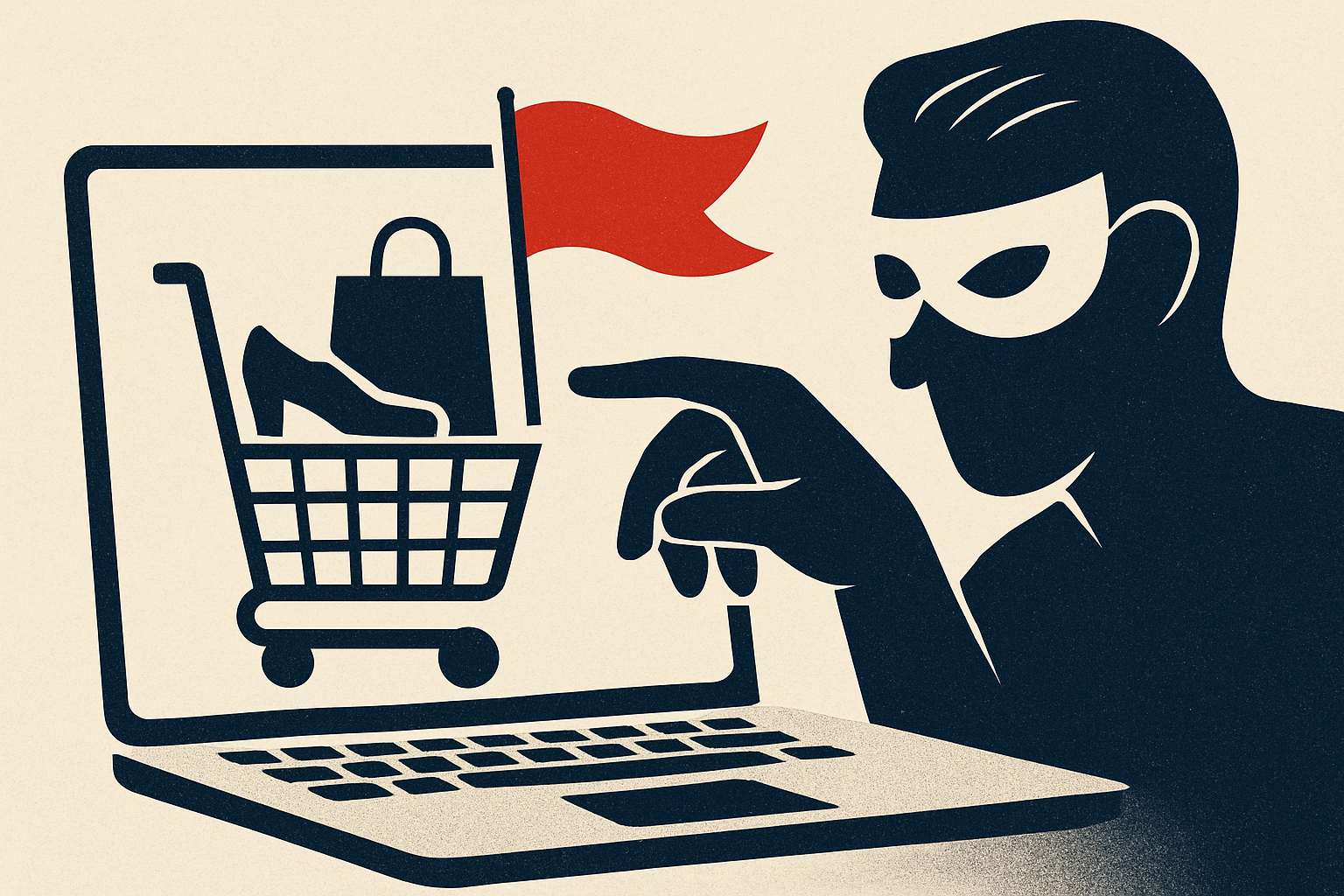
Online shopping fraud has become one of the most pervasive consumer threats in the digital age — and the numbers prove it. According to the FTC, online shopping issues ranked as the second most commonly reported fraud category in 2024, with consumers reporting $95.2 million in losses from online shopping scams in just the final quarter of a single year. The schemes range from slick fake storefronts to social media ads peddling counterfeit goods, and they are only growing more sophisticated. Whether you shop occasionally or constantly, knowing the red flags of online shopping fraud could save you hundreds — or thousands — of dollars.
What Is Online Shopping Fraud and How It Works
Online shopping fraud encompasses a broad category of scams in which criminals use fake websites, fraudulent social media advertisements, or deceptive online listings to steal money, payment card data, or personal information from unsuspecting buyers. The FBI identifies non-delivery scams — where a victim pays for a product that never arrives — as one of the most common forms. These scams often begin with a fraudster setting up a fake online store or listing products for sale that don't exist, frequently with prices that are significantly lower than those offered by real retailers. Between non-payment and non-delivery scams combined, consumers reported losing nearly $800 million in 2024 alone. Social media has become the primary launchpad for these schemes: in 2025, nearly 30% of people who reported losing money to a scam said it started on social media, with reported losses reaching $2.1 billion — an eightfold increase since 2020. Shopping scams were the single most reported type of social media scam, with more than 40% of social media scam victims reporting they ordered something seen in a social media ad, receiving either a counterfeit item, something completely different, or nothing at all.
Warning Signs to Watch For
Recognizing the red flags of online shopping fraud before you hand over your money or personal data is your most powerful defense. Here are the critical warning signs identified by the FTC, FBI, and state consumer protection agencies:
**Prices That Defy Reality.** If a discount exceeds 70% on a premium brand, you are likely the target — not the beneficiary. Scammers use extreme price cuts to create urgency and override a shopper's better judgment.
**Social Media Ads Linking to Unfamiliar Sites.** Scammers impersonate real companies and run social media ads for brand-name products at unusually low prices. Clicking those ads may send you to a fraudulent website designed to harvest your payment details, ship you counterfeits, or deliver nothing. Many of these ads lead to unfamiliar websites, while others send people to sites impersonating well-known brands claiming to offer big discounts.
**Newly Registered or Suspicious Domain Names.** A domain name that doesn't match the official company name, or a site that was registered only days ago, is a major red flag. Fraudsters spin up disposable storefronts quickly and abandon them after collecting payments.
**No Verifiable Contact Information or Return Policy.** Legitimate retailers publish a physical address, phone number, and a clear return policy. Absence of these — or the presence of only a generic contact form — signals a scam operation.
**Fake or Suspiciously Uniform Reviews.** Some companies create, buy, or post fake reviews to manufacture credibility. Look at a variety of independent review sources; a flood of five-star reviews posted within a short window, all using similar language, is a hallmark of fabricated feedback.
**Pressure Tactics and Countdown Timers.** Artificial urgency — "Only 2 left!" or a ticking countdown clock — is a classic manipulation tool designed to stop you from researching a seller before buying.
**Non-Standard Payment Demands.** If a seller insists on payment via gift cards, wire transfers, payment apps, or cryptocurrency, walk away. Only scammers demand payment this way. Legitimate retailers accept standard credit card payments, which carry legal consumer protections.
How to Protect Yourself
The FTC and FBI offer a clear playbook for staying safe while shopping online. First, research the seller before clicking any ad link. Search the company's name alongside words like 'scam,' 'complaint,' or 'review' to surface reports from other consumers. Second, pay by credit card whenever possible. If you are charged twice, billed for something you never received, or sent a counterfeit item, you can dispute the charge with your credit card company — a protection that wire transfers and gift card payments simply do not offer. Third, keep records of every purchase: save your receipt, order confirmation number, and any seller communications. If something goes wrong, documentation is your fastest path to a refund. Fourth, give yourself time. Rushing purchases — especially during high-volume shopping seasons — causes shoppers to overlook red flags and shady sales tactics like limited-time deals or discounts that are too good to be true. Finally, be especially cautious with social media ads. Scammers buy targeted ads using the same tools legitimate businesses use, allowing them to reach you based on your age, interests, and shopping habits. Seeing a polished ad on a trusted platform is not, by itself, a guarantee of legitimacy.
What to Do If You're Targeted
If you believe you have fallen victim to an online shopping scam, act quickly. First, contact your credit card issuer or bank immediately to dispute the charge and request a freeze or replacement card if your payment data was compromised. Second, report the fraud to the FTC at ReportFraud.ftc.gov — your report contributes to national data that helps investigators identify and shut down scam operations. Third, file a complaint with the FBI's Internet Crime Complaint Center (IC3) at ic3.gov, particularly if your loss is significant; the IC3 coordinates with law enforcement to pursue perpetrators. Fourth, report fake social media ads or storefronts directly to the platform where you encountered them. Finally, if you shared your Social Security number or other sensitive personal data on a fraudulent site, place a fraud alert or credit freeze with the three major credit bureaus — Equifax, Experian, and TransUnion — to prevent identity thieves from opening accounts in your name. Online shopping fraud is designed to move fast; your response needs to match that pace.
- 01How to avoid an online shopping scam this holiday season— FTC Consumer Advice
- 02New FTC Data Show People Have Lost Billions to Social Media Scams— FTC
- 03New FTC Data Show a Big Jump in Reported Losses to Fraud to $12.5 Billion in 2024— FTC
- 04The 4 biggest holiday shopping scams to avoid, according to the FBI— Yahoo Finance / FBI