Online Shopping Fraud: Red Flags to Know in 2025
Online shopping fraud cost consumers nearly $800 million in 2024. Learn the key red flags of fake stores, nondelivery scams, and how to protect yourself.
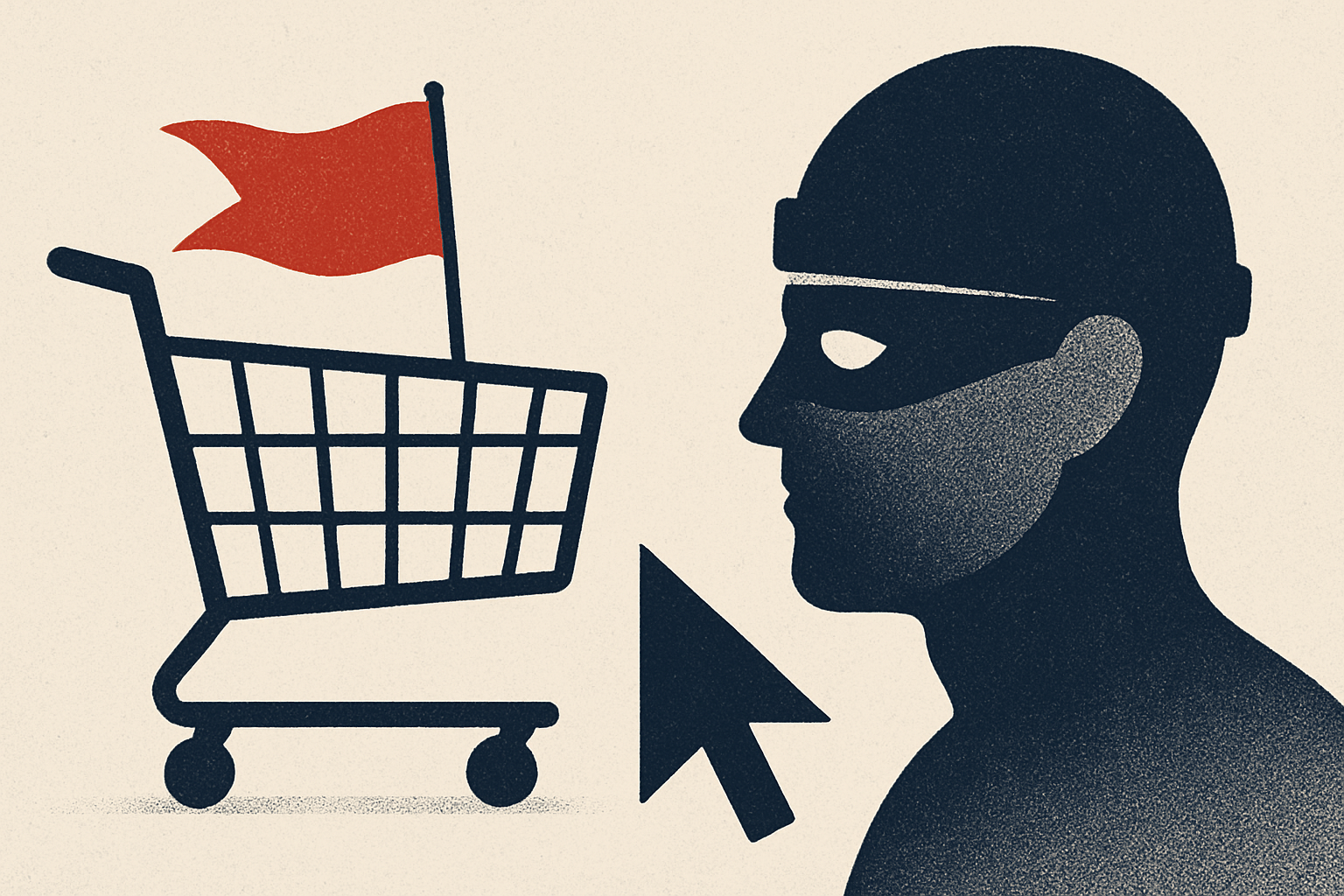
Online shopping fraud is no longer a fringe threat — it is one of the most pervasive forms of consumer crime in the United States. According to the FTC's 2025 data release, online shopping issues were the second most commonly reported fraud category in 2024, trailing only imposter scams. Nonpayment and nondelivery scams alone cost consumers nearly $800 million that year, and the FBI's 2024 IC3 Annual Report recorded a staggering $16.6 billion in total internet crime losses — a 33% increase over 2023. Whether you shop year-round or ramp up activity during the holidays, understanding the anatomy of online shopping fraud is no longer optional. It is essential.
What Is Online Shopping Fraud and How It Works
Online shopping fraud is a broad category of schemes in which criminals exploit e-commerce platforms, social media marketplaces, and counterfeit websites to steal money, payment credentials, or personal information from consumers. The FBI identifies four primary forms: nondelivery scams, where a buyer pays but never receives goods; non-payment scams, where a seller ships merchandise but is never paid; auction fraud, where items are misrepresented on platforms like eBay; and gift card fraud, where a seller demands payment via prepaid cards. Nondelivery schemes are the most common entry point. Fraudsters build convincing fake storefronts — sometimes cloning the visual design of well-known retailers — and list high-demand products at dramatically reduced prices. The FBI and FTC both warn that scammers are increasingly deploying AI-generated fake websites and hyper-realistic phishing emails to trap even careful, tech-savvy shoppers. Social media has become a primary launchpad: the FTC notes that scammers camp out on platforms like Instagram and Facebook, running paid ads for brand-name goods at unusually low prices. Clicking the ad link routes the victim to a fraudulent site designed to harvest payment data or ship a counterfeit, completely different, or nonexistent item.
Warning Signs to Watch For
Knowing the red flags of an online shopping scam can be the difference between a safe transaction and a costly loss. Here are the most critical indicators to watch for:
**Prices that defy market reality.** If an item is listed at a fraction of its typical retail price — especially for electronics, designer goods, or hard-to-find items — treat it as a serious warning sign. The FBI consistently warns that if a deal looks too good to be true, it almost certainly is.
**Suspicious domain names and missing security indicators.** Scam sites often use domain names that slightly misspell a trusted brand (e.g., 'amaz0n-deals.com'). Check that the URL begins with 'https' and displays a padlock icon. If the domain doesn't match the official company name, leave immediately.
**No verifiable contact information or return policy.** Legitimate retailers publish clear contact pages, return and refund policies, and customer service channels. The absence of any of these details is a strong indicator of a fraudulent operation. The New York Division of Consumer Protection specifically flags missing privacy policies and contact pages as key red flags.
**Requests for non-standard payment methods.** The FBI warns that sellers demanding payment via prepaid gift cards, wire transfers, peer-to-peer apps like Zelle, or cryptocurrency are almost certainly running a scam. These methods offer no fraud protection and are virtually untraceable. The FTC reported that in 2024, consumers lost more money to scams paid via bank transfers and cryptocurrency than all other payment methods combined.
**Fake urgency and countdown pressure.** Tactics like 'Only 2 left!' or flashing countdown timers are designed to short-circuit your critical thinking. The FBI notes that criminals count on shoppers rushing through the season and overlooking red flags due to artificial time pressure.
**Social media ads linking to unfamiliar sites.** The FTC explicitly warns that scammers impersonate real companies and run social media ads for brand-name products at unusually low prices. If a sponsored ad directs you to a site you've never heard of, do not enter any payment information before thoroughly vetting the seller.
**Sparse or fabricated reviews.** Fraudulent storefronts often feature reviews that are generic, repetitive, or posted within a narrow date window. Search for independent reviews of the seller or website on platforms like Trustpilot, Reddit, or the Better Business Bureau before purchasing.
How to Protect Yourself
Fraud prevention in online shopping is about slowing down and verifying before you click 'buy.' First, navigate directly to a retailer's website rather than following links in ads, emails, or text messages. The FTC advises consumers to go directly to the vendor's SSL-encrypted website rather than clicking promotional links, which can route you to convincing clones. Second, vet unfamiliar vendors thoroughly — search their name alongside words like 'scam' or 'reviews,' check their social media comment sections, and confirm they list a physical address and working customer service contact. Third, always pay by credit card when shopping online. Credit cards carry the strongest federal consumer protections, allowing you to dispute unauthorized or fraudulent charges. Debit cards, gift cards, wire transfers, and cryptocurrency offer little to no recourse. Fourth, be especially cautious when shopping on a mobile device. Research shows it is significantly harder to detect fake URLs and spoofed site design on a small screen, and mobile shopping now accounts for more than half of all e-commerce activity. Fifth, routinely monitor your bank and credit card statements after any online purchase, and in the weeks following high-volume shopping periods, to catch unauthorized charges early.
What to Do If You're Targeted
If you believe you have fallen victim to an online shopping scam, act quickly and systematically. Immediately contact your bank or credit card issuer to dispute the charge and, if necessary, freeze or cancel your card. If you shared sensitive personal information — such as your Social Security number, date of birth, or account credentials — place a fraud alert or credit freeze with all three major credit bureaus (Equifax, Experian, and TransUnion). Report the incident to the FBI's Internet Crime Complaint Center at ic3.gov, and file a complaint with the FTC at reportfraud.ftc.gov. These reports are not merely bureaucratic formalities: IC3 data is actively used by federal and international law enforcement to identify and dismantle fraud networks. You should also report the fraudulent listing or ad directly to the social media platform or marketplace where you encountered it. The more consumers report, the harder it becomes for scammers to operate. Finally, if you paid via gift card — a common scam demand — report the fraudulent transaction to the gift card issuer directly, as some companies can freeze unused balances if contacted quickly. Remember: online shopping fraud is vastly underreported, meaning the billions in documented losses represent only a fraction of what consumers actually lose each year.
- 01How to avoid an online shopping scam this holiday season— FTC Consumer Advice
- 02New FTC Data Show a Big Jump in Reported Losses to Fraud to $12.5 Billion in 2024— Federal Trade Commission
- 03Holiday Scams | Federal Bureau of Investigation— FBI
- 04FBI Cleveland Warns of Holiday Scams During the 2024 Shopping Season— FBI