Online Shopping Fraud Red Flags to Know Now
Online shopping fraud cost consumers over $785 million in 2024. Learn the key red flags of fake stores, nondelivery scams, and how to shop safely online.
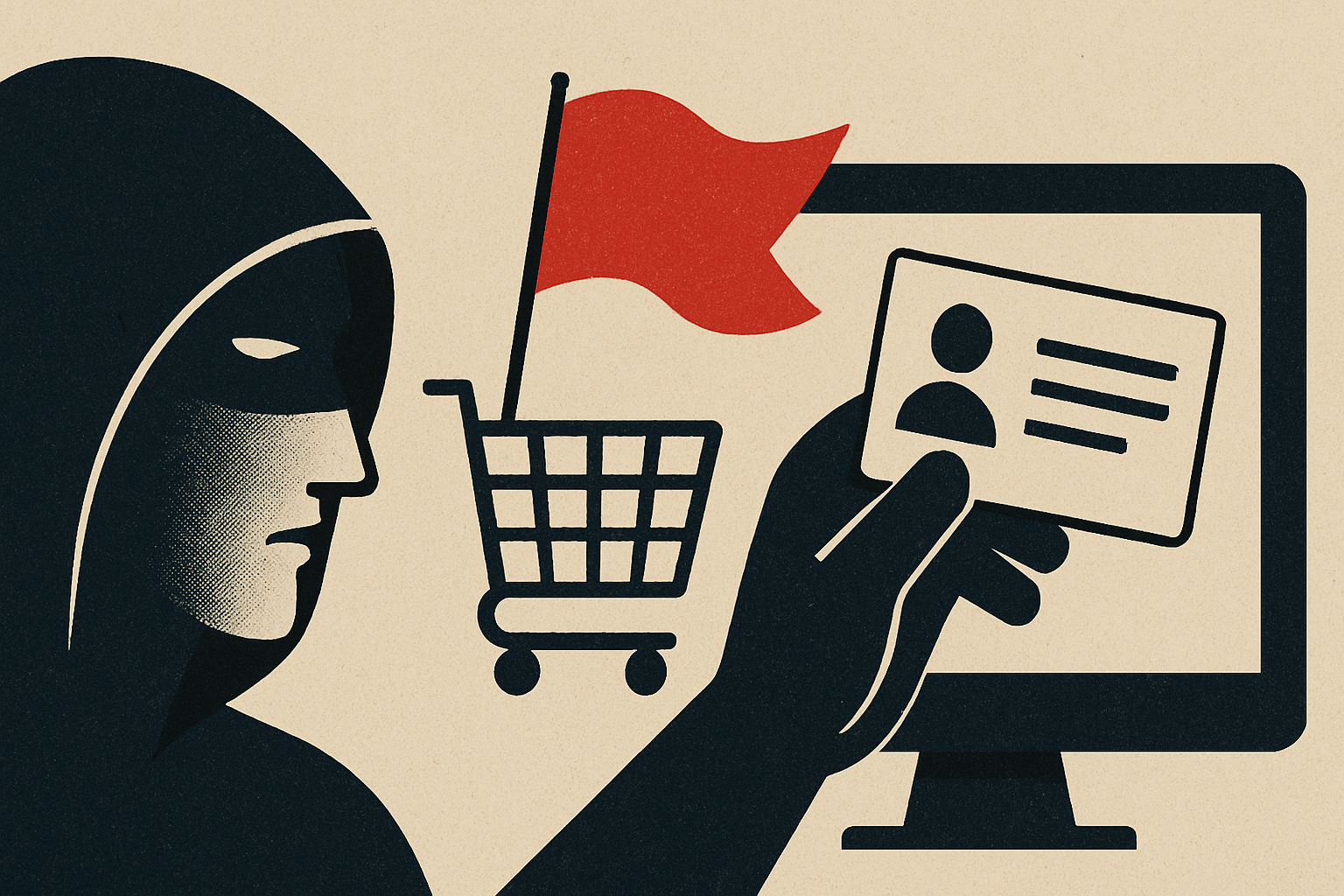
Online shopping fraud has exploded into one of the most prevalent consumer threats in America. According to the FTC's latest data, online shopping issues ranked as the second most commonly reported fraud category in 2024, and the FBI's Internet Crime Complaint Center (IC3) recorded a staggering $16.6 billion in total internet crime losses that same year — a 33% increase from 2023. Nondelivery and nonpayment scams alone cost consumers more than $785 million in 2024. If you shop online, understanding the red flags of shopping fraud isn't optional — it's essential.
What Is Online Shopping Fraud and How It Works
Online shopping fraud occurs when criminals deceive consumers into paying for goods or services that never arrive, are counterfeit, or were never real in the first place. The FBI identifies several primary forms: nondelivery scams, where you pay but receive nothing; fake online storefronts that mimic legitimate retailers; auction fraud; and social media ad scams that funnel victims to fraudulent checkout pages. These operations often begin with scammers setting up fake online stores or listing products for sale that don't exist, frequently at prices far below market value. Fraudulent sites are becoming increasingly sophisticated — what once looked obviously fake now closely mirrors professional e-commerce platforms, complete with stolen product photography, fabricated reviews, and convincing branding. Social media platforms have become a primary launchpad: ads and posts on Facebook, Instagram, and similar platforms promote deeply discounted merchandise, directing buyers to look-alike websites that are built solely to steal payment data or pocket money without delivering a product. Because these ads bypass spam filters entirely, many consumers encounter them with their guard down.
Warning Signs to Watch For
Knowing the red flags of a fraudulent online store can be the difference between a safe purchase and a costly mistake. Here are the most critical warning signs identified by federal agencies and consumer watchdogs:
1. Prices That Are Too Good to Be True. Fraudulent stores lure buyers with prices dramatically lower than legitimate retailers. If a deal seems impossibly cheap, treat it as a scam until proven otherwise.
2. Suspicious or Look-Alike Domains. Scammers register domains with subtle misspellings, extra words, or unusual extensions (e.g., '.shop' or '.store') to impersonate trusted brands. Always double-check the URL before entering payment information.
3. Unusual Payment Methods. Legitimate retailers accept major credit cards with buyer protections. Requests for payment exclusively by bank transfer, wire transfer, cryptocurrency, or gift cards are a serious red flag — these methods offer little to no recourse after payment.
4. No Verifiable Contact Information. A trustworthy store will list a real physical address, a working phone number, and a responsive customer service email. Sites with only a vague web form or no contact details at all should be avoided.
5. Copied or Generic Product Photos. Fraudulent stores routinely steal product images from legitimate retailers. A reverse image search can reveal whether photos belong to another website.
6. Pressure Tactics and Countdown Timers. Artificial urgency — flashing 'Only 2 left!' warnings or countdown timers on deals — is a classic manipulation technique designed to prevent you from pausing to investigate.
7. Reviews That All Sound the Same. Fake review profiles use repetitive language, lack specifics, and are often posted within a narrow date range. Scrutinize review authenticity before trusting a seller.
8. No Clear Return or Refund Policy. Absence of a return policy, or a policy buried in vague language, signals a store that has no intention of handling disputes fairly. According to BBB data, over 80% of consumers who reported encountering an online shopping scam said they lost money — with limited ability to recover it.
How to Protect Yourself
Protecting yourself from online shopping fraud requires deliberate habits before and during every transaction. First, go directly to a retailer's website rather than clicking on links in ads, emails, or social media posts — this alone eliminates a significant vector for fraud. Look for the padlock (SSL/HTTPS) in your browser bar, though be aware that even scam sites may now display this symbol, so it is necessary but not sufficient. Before buying from an unfamiliar seller, search for the business name combined with words like 'scam' or 'reviews,' and check the BBB's Scam Tracker. Verify that the domain has a meaningful age and history using a WHOIS lookup — newly registered domains with no history are a major warning sign. Always pay with a credit card rather than a debit card, bank transfer, or any irreversible method; credit cards offer chargeback protections that can recover funds after fraud. The FTC recommends taking your time: avoid rushing purchases during high-pressure sales events, when scammers specifically count on urgency overriding judgment. Finally, monitor your bank and card statements closely after any online purchase from an unfamiliar retailer.
What to Do If You're Targeted
If you believe you've fallen victim to an online shopping scam, act quickly. Contact your credit card company or bank immediately to dispute the charge and request a chargeback — do this as soon as possible, as time limits apply. Report the fraud to the FTC at ReportFraud.ftc.gov, and file a complaint with the FBI's Internet Crime Complaint Center at IC3.gov. You can also report the fraudulent website to the BBB Scam Tracker to warn other consumers. If you shared personal or financial information beyond the transaction — such as your Social Security number or bank login — consider placing a fraud alert or credit freeze with the three major credit bureaus (Equifax, Experian, and TransUnion). Remember: losses reported to the IC3 represent only a fraction of the true toll, since fraud so often goes unreported. Reporting your experience helps law enforcement identify patterns, disrupt fraud networks, and protect others from the same schemes. The most powerful action you can take after being targeted is to report it.
- 01New FTC Data Show a Big Jump in Reported Losses to Fraud to $12.5 Billion in 2024— FTC
- 022024 IC3 Annual Report— FBI / IC3
- 032024 Study Update: Online Shopping Fraud— Better Business Bureau
- 04Cyber Safe Holidays: Recognizing and Avoiding Seasonal Scams— U.S. Department of the Treasury