Real Estate Wire Fraud: How to Spot It
Real estate wire fraud cost victims over $275 million in 2024. Learn how BEC scams hijack closings and how to protect your down payment.
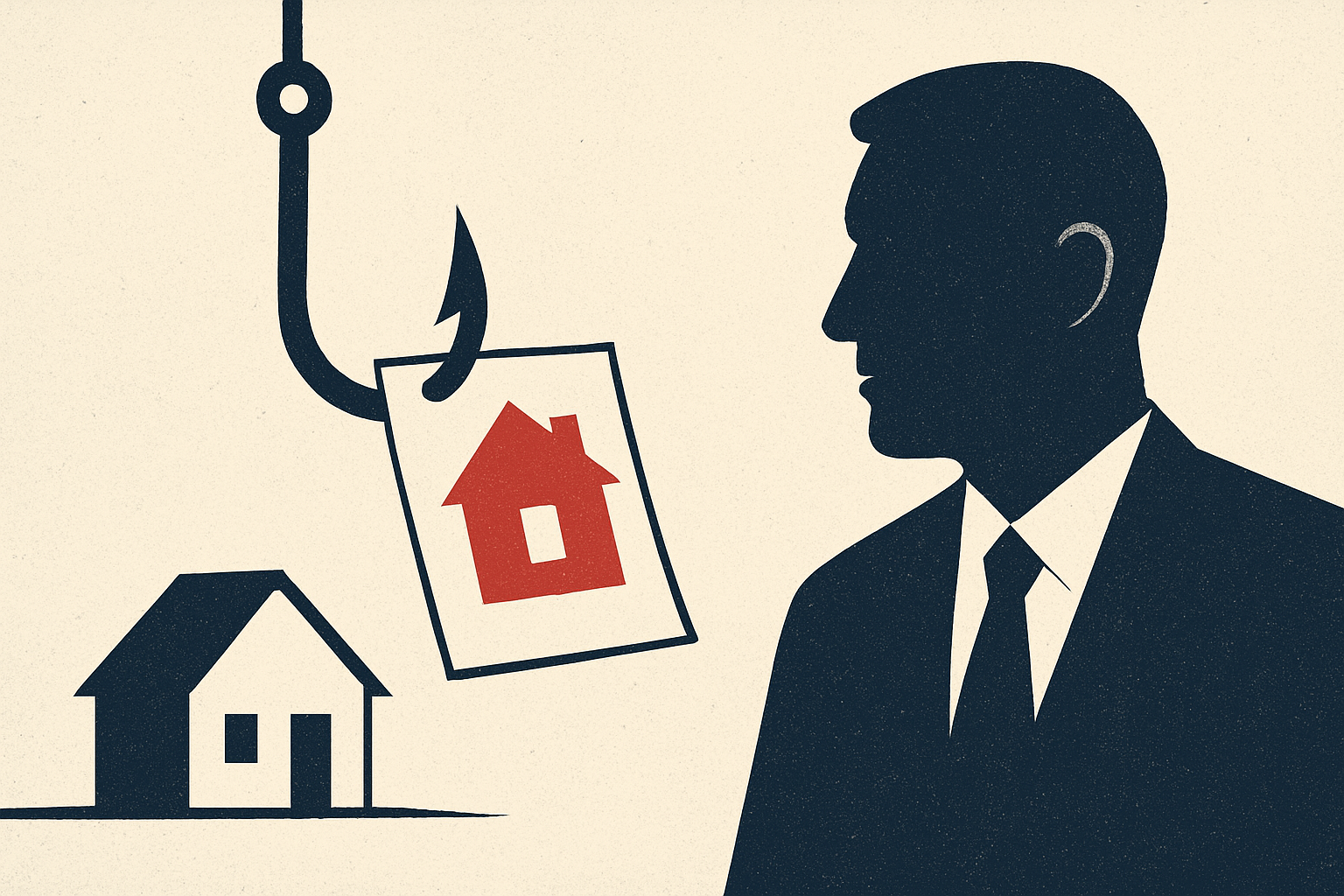
You've found the home. You've signed the contracts. Closing day is finally here — and then an email arrives from what appears to be your title company, with updated wire instructions. One click, one transfer, and your life savings are gone. Real estate wire fraud is one of the most financially devastating scams in America today. According to the FBI's Internet Crime Complaint Center (IC3), over $275 million in losses came directly from real estate transactions in a single reporting year, as part of a broader $20.8 billion cybercrime total. Understanding exactly how this scam works — and what the red flags look like — could save you everything.
What Is Real Estate Wire Fraud and How It Works
Real estate wire fraud is the unlawful diversion of funds during a property transaction. It most commonly begins with Business Email Compromise (BEC) — a technique where criminals either hack a legitimate email account belonging to a real estate agent, title officer, or attorney, or create a nearly identical spoofed account. Once inside the communication chain, they monitor the transaction quietly, learning the names, amounts, timelines, and personalities involved. At precisely the right moment — typically days before closing — they send a fraudulent email that appears to come from a trusted party, instructing the buyer to wire their down payment or closing funds to a new bank account. That account belongs to the fraudster. In a documented March 2024 case from the FBI's own annual report, victims received a spoofed email appearing to come from their real estate agent requesting a wire of $956,342. Two days after the transfer, they realized the email address was fake. In another 2024 case, fraudsters impersonated an attorney, title agent, and realtor simultaneously — using email addresses ending in '.cam' instead of '.com.' The difference was invisible at a glance. BEC scams target every participant in a transaction: buyers, sellers, agents, attorneys, and title companies. Once an attacker gains access to any one participant's email, they can surveil the entire closing and strike at the most lucrative moment. Fraud operators now use AI tools to create realistic fake identities, ownership documents, deepfake impersonations, and large-scale phishing campaigns — dramatically increasing the scale and credibility of these attacks.
The Alarming Scale of the Problem
The numbers are staggering and growing. From 2020 to 2022 alone, victim reports of BEC scams connected to real estate jumped 27%, while dollar losses surged 72%. The FBI reported that real estate wire fraud losses grew from under $9 million in 2015 to hundreds of millions annually by the early 2020s. The median loss per victim exceeds $70,000 — often representing an entire down payment or life savings. First-time homebuyers are especially vulnerable: a 2025 State of Wire Fraud Report found they are three times more likely to fall victim than experienced buyers. One in four consumers report receiving suspicious messages during a real estate closing process. The emotional toll compounds the financial: victims describe the experience as a violation on par with a home burglary. And recovery, when it happens at all, is never guaranteed — even the FBI's dedicated Recovery Asset Team, which froze over $561.6 million in 2024, can only claw back a fraction of total losses, particularly when funds are routed overseas or converted to cryptocurrency.
Warning Signs to Watch For
Recognizing the hallmarks of real estate wire fraud before you transfer any funds is your strongest defense. Be alert to these critical red flags: (1) Last-minute changes to wiring instructions — legitimate title companies almost never change bank account details at the eleventh hour. Any such request should be treated as suspicious, even if the email looks official and contains accurate details about your transaction. (2) Slight misspellings in email domains — fraudsters who cannot hack a real account will clone it, substituting a character, adding a hyphen, or swapping '.com' for '.cam' or '.co'. (3) Urgency and pressure — scammers manufacture time pressure, insisting you must wire 'today' or 'before the close of business' to prevent the deal from falling through. (4) Requests to keep the change confidential — no legitimate professional will ask you not to verify wiring instructions with other parties. (5) Instructions delivered only by email — real closing instructions should always be confirmable by direct phone call to a number you independently verified, not one included in the suspicious email itself.
How to Protect Yourself
Prevention requires layered habits, not just awareness. First, establish a verbal verification protocol from day one: agree with your title company, agent, and attorney that any change to wiring instructions will be confirmed via a phone call to a number you already have on record — never a number provided in an email. Second, set up two-factor authentication on all email accounts involved in the transaction. Fraudsters cannot monitor a conversation they cannot access. Third, independently look up contact information for all parties — don't rely on email signatures or links within messages. Fourth, scrutinize every email domain carefully before replying or acting; hover over sender addresses and look for character substitutions. Fifth, be especially vigilant in the 48–72 hours before closing, when the attack is most likely to occur. Title companies and agents play a role too: implementing secure, encrypted communication channels for sending wiring instructions and training staff to recognize phishing attempts are essential institutional safeguards. According to one industry report, 51.8% of real estate transactions in late 2023 contained risk indicators for wire or title fraud — a record high — meaning the threat is now a near-routine part of the closing process.
What to Do If You're Targeted
If you believe you have wired funds to a fraudulent account, every minute counts. First, call your bank immediately and ask them to issue a wire recall — the faster you act, the higher the chance of recovery. Second, file a complaint with the FBI's Internet Crime Complaint Center at IC3.gov, providing all financial transaction details, email headers, and any contact information you have for the suspected fraudster. The FBI advises filing within 24 hours, and no more than 72 hours, to maximize the effectiveness of its Financial Fraud Kill Chain process. Third, contact your local FBI field office directly. Fourth, preserve all emails — including full headers — and do not delete any communications. Fifth, report the incident to the FTC at ReportFraud.ftc.gov. If you received a spoofed email appearing to come from a legitimate business, that header data can be critical evidence. Change all passwords and enable two-factor authentication immediately, as fraudsters who accessed your email once may still have it. Wire fraud is a federal crime carrying up to 20 years in prison — the FBI takes these cases seriously, and your prompt report gives law enforcement the best possible chance to freeze the stolen funds before they disappear.
- 012024 IC3 Annual Report— FBI / IC3
- 02Wire Fraud— National Association of REALTORS®
- 03Responding to Wire Fraud— Old Republic Title
- 04Top Wire Fraud Stories of 2024 | CertifID— CertifID