Real Estate Wire Fraud: How to Spot & Stop It
Real estate wire fraud cost Americans over $275 million in 2025. Learn how BEC scams hijack closings and how to protect your down payment.
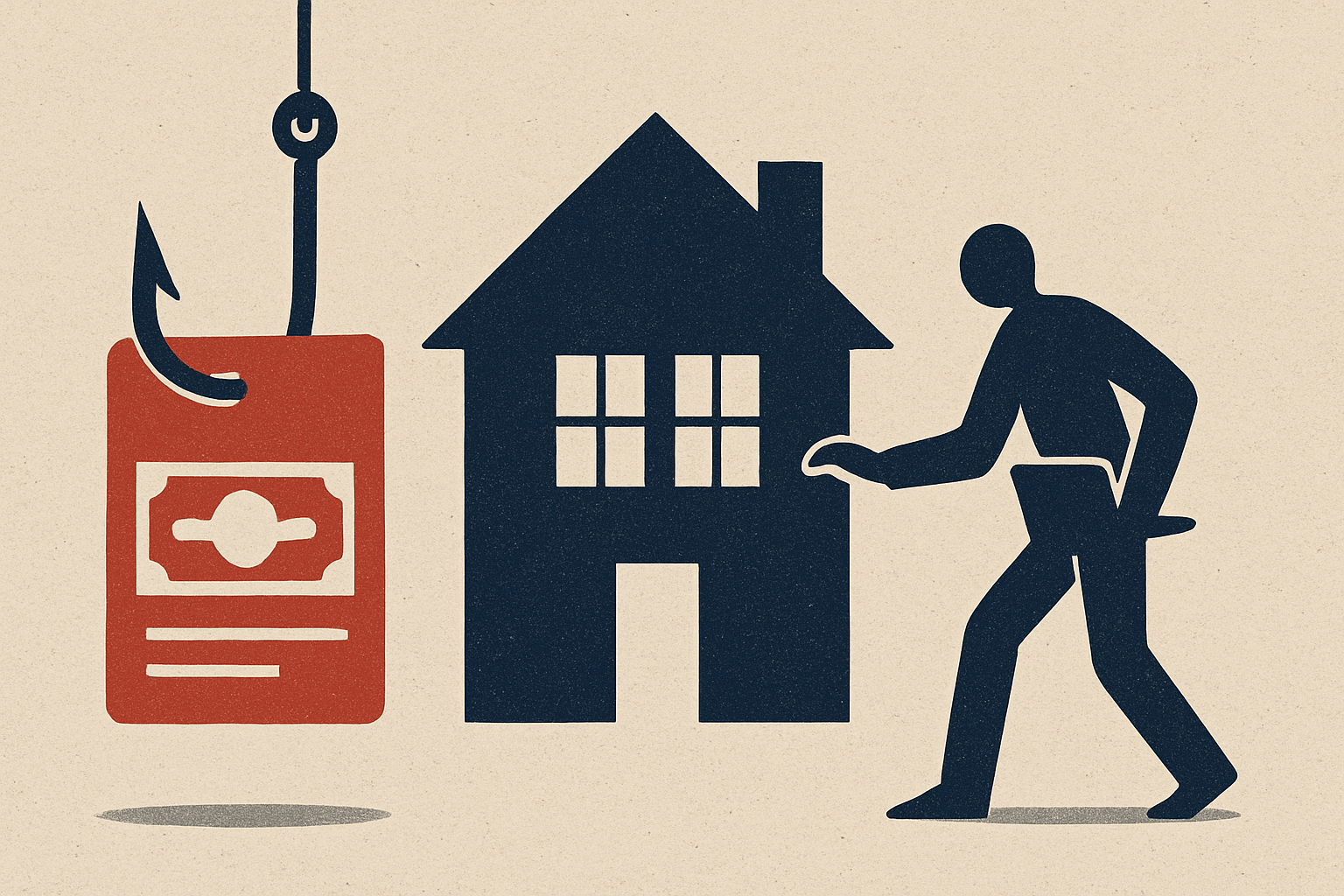
Imagine wiring your entire down payment — $80,000, $200,000, or more — only to discover minutes later that it landed in a criminal's account overseas. This nightmare scenario is playing out thousands of times a year across the United States. Real estate wire fraud is one of the most financially devastating and emotionally crushing crimes in the modern fraud landscape, and it is accelerating. According to the FBI's 2025 Internet Crime Complaint Center (IC3) Annual Report, total reported losses from cyber-enabled crime reached $20.877 billion — a 26% increase from the prior year — with over $275 million of those losses traced directly to real estate transactions. These are not abstract statistics. They represent families who lost their life savings at the moment they were supposed to be celebrating the biggest purchase of their lives.
What Is Real Estate Wire Fraud and How It Works
Real estate wire fraud is the unlawful diversion of funds during a property transaction. It most commonly operates through a scheme known as Business Email Compromise (BEC), which the FBI now ranks as one of the most financially damaging forms of cybercrime, generating $3.046 billion in reported losses in 2025 alone. The attack targets every participant in a transaction: buyers, sellers, real estate attorneys, title companies, and agents. The scam typically unfolds in three stages. First, criminals either hack into a legitimate email account belonging to a realtor, title officer, or closing attorney, or they create a nearly identical spoofed email address — perhaps swapping one letter or adding a hyphen — that most people would never notice. Second, the attacker silently monitors the email thread for weeks, learning the names of all parties, the closing timeline, and the expected wire amounts. Finally, at a critical moment just before closing, they send the buyer updated wire instructions that redirect funds to a fraudulent account. The email looks authentic, uses the correct names and signatures, and arrives exactly when a wiring change would seem plausible. Once the wire is sent, the funds can be moved to secondary accounts — domestic or international — within minutes, making recovery extremely difficult.
The Scale of the Problem: By the Numbers
The financial toll of real estate wire fraud has grown dramatically over the past decade. The FBI reported that losses from wire fraud in real estate transactions grew from under $9 million in 2015 to $446 million in 2022. In 2024, the FBI's IC3 recorded 9,359 real estate and rental fraud complaints resulting in losses exceeding $173.6 million. The 2025 IC3 Annual Report confirms the trend continued upward, with over $275 million in real estate transaction losses. Industry data makes the scope even starker: a report found that 51.8% of real estate transactions in the final quarter of 2023 contained risk indicators for wire or title fraud — an all-time high. Victims of real estate wire fraud suffer a median financial loss exceeding $70,000, making it one of the most individually damaging fraud categories tracked by federal law enforcement. And because wire transfers are generally irreversible, recovery is rare. The FBI's Recovery Asset Team achieved a 71% success rate in freezing fraudulent transfers in 2023 — but only when victims reported the fraud immediately. Every hour of delay dramatically reduces the odds of getting any money back.
Warning Signs to Watch For
Recognizing the red flags of real estate wire fraud can be the difference between a safe closing and financial ruin. The most dangerous warning sign is any last-minute change to wire instructions received by email. Legitimate title companies and attorneys almost never change wiring instructions at the eleventh hour — and they certainly do not do so without a direct, verified phone call. Watch closely for email addresses that look nearly right but contain subtle variations: an extra character, a swapped letter, a hyphen, or a different domain suffix. Fraudsters who cannot break into a real account will manufacture one that is close enough to fool a distracted buyer. Be especially suspicious if an email urges urgency — phrases like 'wire today or the closing will be delayed' are a classic pressure tactic designed to short-circuit your critical thinking. Other red flags include wiring instructions that route funds to an out-of-state or unfamiliar bank, requests that you not discuss the new instructions with others, and any communication that arrives outside of normal business channels or hours. AI is now amplifying the threat: fraud operators are using AI tools to create realistic fake identities, ownership documents, and payoff instructions, and even deploying deepfakes for impersonation.
How to Protect Yourself
The single most powerful defense against real estate wire fraud is a verified phone call — every time, without exception. Before wiring any funds, call your title company or closing attorney directly using a phone number you obtained independently (from a business card, official website, or previous in-person meeting) — never from a number included in the email you received. Establish your closing team's contact information early in the transaction and keep it written down. At the start of the process, ask your title company how they will communicate wire instructions and confirm that policy in writing. Enable multi-factor authentication on every email account used in the transaction — this is the primary way criminals gain access to legitimate inboxes. Request that your title company or attorney use a secure, encrypted portal for transmitting any financial instructions rather than standard email. Finally, be aware that one in four consumers reported being targeted by fraud attempts during the real estate closing process — meaning even experienced buyers are not immune. Treat any change to wire instructions as a potential attack until you have personally verified it by voice with a known, trusted contact.
What to Do If You're Targeted
Speed is everything. If you suspect you have wired funds to a fraudulent account, contact your bank immediately and ask them to initiate a wire recall. Every minute counts — fraudsters move money to secondary accounts within minutes of receipt. Simultaneously, contact the title company or attorney whose identity was used in the fraud to alert them that their email or identity may be compromised. Report the crime to the FBI's Internet Crime Complaint Center at ic3.gov as quickly as possible. The FBI's Recovery Asset Team monitors IC3 complaints in real time and can activate its Financial Fraud Kill Chain — a process that coordinates with financial institutions to freeze funds before they disappear. In one documented 2025 case, homebuyers received an email impersonating their attorneys and wired over $449,000 to criminals; the RAT was able to freeze the full amount because the victims reported it promptly. Also file a report with the FTC at ReportFraud.ftc.gov. Wire fraud is a federal crime carrying up to 20 years in prison under 18 U.S.C. §1343 — and when financial institutions are involved, sentences can reach 30 years. Report it, because your complaint may be the data point that stops the next victim.
- 012025 IC3 Annual Report— FBI / IC3
- 02Business Email Compromise: The $50 Billion Scam— FBI / IC3
- 032024 FBI IC3 Cybercrime Report: A Breakdown— CertifID
- 04Avoiding real estate wire fraud: Key steps for financial institutions— Abrigo